


Celebrating 100 Years of CPRE: A Night in the Field
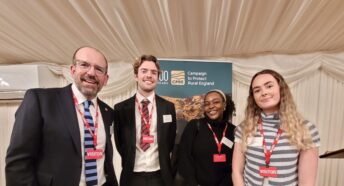
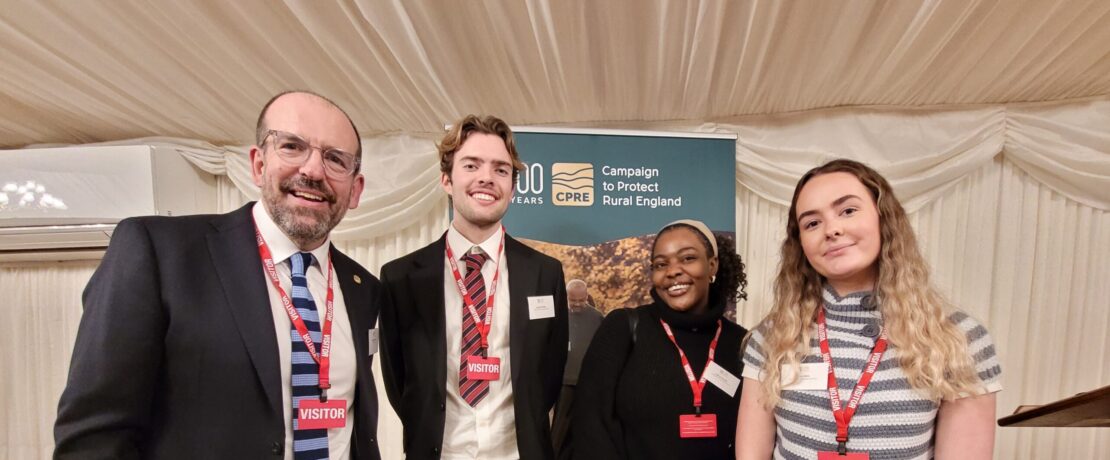
In February, some of our Online Campaigns Activists (OCAs) — a flexible volunteering role — attended CPRE’s centenary event in Parliament, marking 100 years of campaigning for the countryside. Joe Paulger shares his personal experience of the evening, reflecting on the people, conversations and ideas shaping the future of CPRE’s work.
At the start of February, I had the pleasure of attending the CPRE Centenary Parliamentary event celebrating 100 years of CPRE. The evening began in typical British fashion… in the pouring rain, but while strolling to The Burghers of Calais statue suited and booted, brolly in hand, I couldn’t help but feel like the main character of a Hollywood blockbuster.
Once I arrived, I was greeted by Dr Crewenna and Enikan. After getting acquainted, we quickly decided the best plan of action was to head inside and hope our final online campaign activist Elinor, could navigate Westminster security solo. Thankfully, she was able to join us in the queue.
We were promptly told to stand and deliver by the highwaymen of Westminster (security). Unfortunately, during this frisking I lost my ring, so if I see Keir Starmer flaunting some new jewellery at the next public address, I know where it has gone. Next we headed into the Cholmondeley Room reception where I quickly regained my bubbly persona, aided of course by free prosecco. This was greatly appreciated as I was left feeling rather parched after the previous kerfuffle. It wasn’t long after we entered the main room that the canapés stopped and the speeches started.
I won’t go into great detail about every speech, but what struck me most throughout the evening was the depth of care and affection for both the countryside and CPRE itself. The organisation clearly brings together people from all walks of life, cutting across political divides and personal backgrounds. Whether raised in the Big Smoke or on a quiet farm in Northumberland, there was a shared belief in the value of rural landscapes and the communities within them.
After the speeches it was time for the dreaded networking stage, where in order to make the most of it, you have to drift in and out of conversations, introducing yourself and extracting contact details as quickly as possible without seeming rude, akin to some sort of well-planned heist.
While I could have spent the evening swanning around flexing my networking muscles, I instead enjoyed a few lengthy conversations with the likes of David from English Rural, who patiently put up with me for the majority of the event and helped me gain a deeper understanding of all things rural and countryside. My interest was particularly piqued by how English Rural’s community work allows for the seamless assimilation of new residents into villages.
I also want to thank Richard Knox-Johnston, Chairman of the London Green Belt Council. While we didn’t get to chat for long at the event, he graciously agreed to a call at a later date where we discussed the issues facing the green belt, the countryside, and current politics. I left the evening feeling optimistic about the future of the countryside, but not complacent. While preserving green spaces is vital, we cannot afford to confuse protection with restoration. Biodiversity in the UK is in serious decline. A managed forest is not the same as ancient woodland. A green field is not automatically a thriving ecosystem.
If CPRE’s first century was about saving the countryside from being built over, perhaps its second must be about ensuring what we save is alive, resilient, and ecologically rich, not just visually pleasant.
Protecting the countryside should mean protecting not just the land, but the life within it.