


A summary of CPRE’s response to the NPPF consultation
The government consultation on a new National Planning Policy Framework (NPPF) has now closed and many of you sent in your own responses using our online guide. Thank you for your support. Together we have been a strong voice for the countryside.
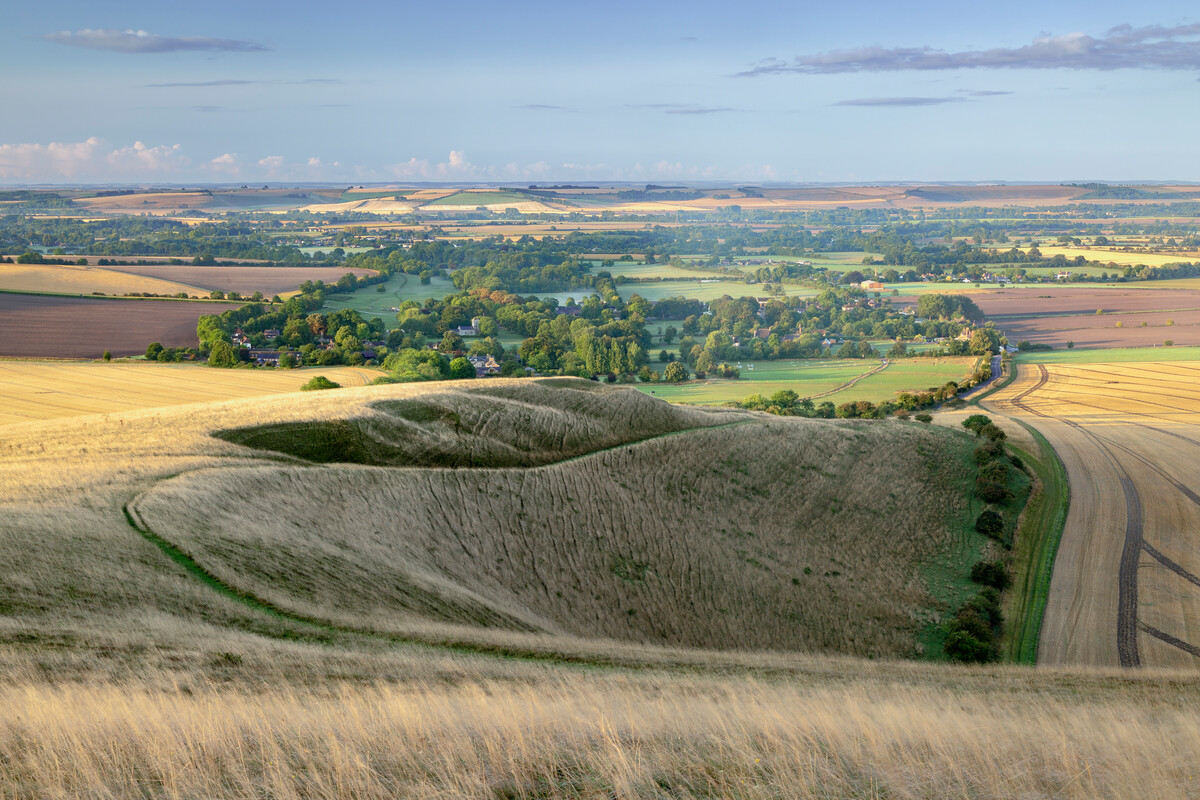
In our response, we call for stronger protections for the countryside, safeguarding the Green Belt, prioritising brownfield sites for housing, and scrapping the poorly-defined ‘grey belt’ policy. We also make the case for better protection for valued landscapes, trees, and hedgerows. We welcome steps to increase rural affordable housing, but believe that rural development should include genuinely affordable homes linked to local incomes rather than market prices.
Below is a summary of the key points CPRE raised in our response. Alternatively, you can read our full response.
Full response to NPPF consultation
Green Belt Protection
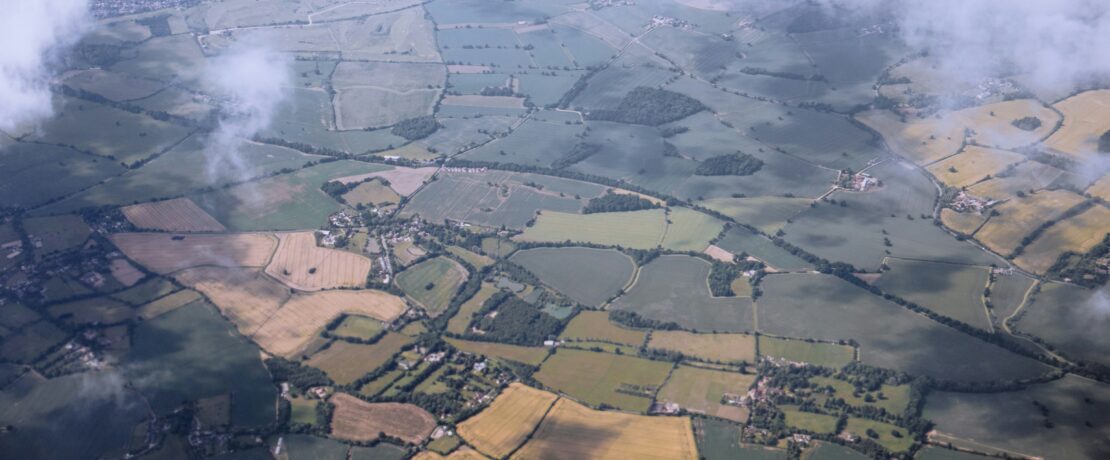
As a founding champion of the Green Belt, CPRE is urging the government to uphold genuine Green Belt protection by prioritising brownfield regeneration and rejecting speculative ‘grey belt’ development. We believe new housing should only come forward through democratically agreed local plans, not via loopholes tied to arbitrary targets in the government’s standard‑method housing algorithm. With three‑quarters of the public calling for stronger countryside protections, and with urban brownfield land capable of providing up to 1.4 million homes, there is no justification for weakening Green Belt policy or introducing automatic development zones around train stations outside existing urban areas.
1. Green Belt policy must uphold openness, permanence, and the policy’s purposes
Several proposed changes (GB6 and GB7) weaken the tests for inappropriate development and risk normalising Green Belt loss. CPRE argues these changes contradict the NPPF’s own stated Green Belt purposes of preventing urban sprawl and keeping land permanently open.
2. The ‘grey belt’ policy is undermining the Green Belt and should be scrapped
CPRE evidence shows the grey belt policy is being used to release greenfield land, including local wildlife sites and farmland with high quality soils, and not degraded sites as promised. This has fuelled speculative development, confusion, and the “greying” of precious Green Belt land. CPRE calls for the policy to be removed entirely, or at minimum, tightly restricted and only identified through spatial development strategies.
3. Development near rural railway stations threatens openness and increases car use
Policies allowing more development simply because land is near a station (GB3 and GB7h) would lead to suburban sprawl, ribbon development, and higher car dependency, especially around isolated rural stations lacking services. CPRE supports development near urban stations on brownfield land, not rural Green Belt land.
4. Viability assessments must not become a loophole for Green Belt development
Developers frequently use viability arguments to reduce affordable housing or infrastructure contributions. CPRE warns that allowing viability assessments on so-called ‘grey belt’ sites risks undermining the government’s golden rules for this kind of development, which so far have not been fully tested.
Valued Landscapes
CPRE welcomes the draft NPPF’s stronger protections for hedgerows and trees, as well as its intention to focus development within existing settlements. But since 2012 our ‘ordinary’ countryside has been increasingly exposed to sprawling, poor‑quality greenfield development driven by unrealistically high housing targets. Between August 2020 and August 2022, for example, over 140 major greenfield housing developments were allowed on appeal over the heads of local authorities. and the new draft NPPF still offer developers too many ways around local controls. We are especially concerned by the removal of the “valued landscapes” policy, which has long helped local authorities defend much‑loved rural areas from unnecessary loss. CPRE believes that all rural landscapes, not only those with national designations, are valued by the communities who depend on them and must be protected accordingly.
1. Valued landscapes deserve real protection
The government’s new draft ‘N2: Improving the natural environment’ policy risks leaving much of England’s most beautiful countryside unprotected, especially outside National Parks and National Landscapes. These ‘valued landscapes’ include the rural views, historic lanes, wildlife‑rich fields and much‑loved walking routes that make our countryside special. We’re calling for the NPPF to explicitly recognise ‘landscape character and value’, and recognise that all countryside has an intrinsic value, so these places don’t fall through the cracks.
2. Valued landscapes are not a blocker to good development
Developers often claim that protecting valued landscapes stops homes being built, but the evidence says otherwise. Planning inspectors have approved approximately 100 (or 40%) of all appeals for developments where the policy was applied since it was introduced in 2012. The valued landscape test simply prevents the worst, most harmful proposals. It’s a balanced, effective safeguard, not a blocker.
3. Protecting trees and hedgerows must be the rule
We support the new protections for trees and hedgerows, but the phrase “wherever possible” undermines them. Ancient hedgerows are irreplaceable habitats, and CPRE groups across the country are restoring them through our Hedgerow Heroes campaign. Policy must ensure hedgerows are protected and integrated into new developments, not removed and “offset” elsewhere. These features are part of the landscape’s history and character – once lost, they’re gone.
4. A flawed housing formula that drives green space encroachment
CPRE has major concerns with draft Policy S5, which relies heavily on a stock‑based formula (the so-called ‘standard method’) that creates inflated local housing targets and five‑year housing land supply calculations. This approach risks unnecessary harm to Valued Landscapes and Green Belt land whilst bearing no relation to local needs and sets councils up to fail meeting their housing targets.
Instead, housing requirements should be based on a national method that supports, not overrides, local evidence.
Rural Affordable Housing
CPRE welcomes the meaningful steps in the draft NPPF to boost rural affordable housing, reflecting many of the recommendations we have championed over the past decade, particularly in our State of Rural Affordable Housing report. Proposals to enable more affordable homes on small rural development sites are a positive shift, but significant gaps remain. We believe it is essential that every new rural development carries a consistent expectation to deliver affordable housing, ensuring rural communities finally get the homes they urgently need.
1. Affordable homes on every rural site
While CPRE welcomes proposals to secure affordable housing on small rural sites, our research shows that only 1 in 5 rural local plans currently require genuinely affordable social housing. We are calling for a simple principle: every new rural development should deliver affordable homes until local plans catch up.
2. At least 10% social rent on major sites
To address rural housing need in a meaningful way, the NPPF should require at least 10% of all major developments to be social rent, not just a vague “affordable” category that often remains unaffordable to local people. We also support the National Housing Federation’s call for 25%.
3. Redefining rural areas to unlock more affordable homes
Only half of rural England currently counts as a ‘designated rural area’, which limits when small sites must deliver affordable housing. CPRE strongly supports widening this definition so that even the smallest rural sites contribute to meeting need, reducing dependence on rural exception sites and helping SME builders compete for land.
4. Making ‘affordable’ truly affordable
Although rural affordable housing delivery has increased, the current definition–homes at up to 80% of market rates–still prices out many local people. We want “affordable” to be anchored to local incomes, not the inflated rural housing market.
5. Caution on allowing larger market homes
Proposals to give developers more flexibility on market home sizes raise concerns. This may simply increase land take on greenfield sites without improving viability for affordable homes. Instead, we back a national policy on minimum social rent and tenure mix, echoing the Letwin Review.
6. Cash contributions should be the exception
We are concerned about allowing developers to provide cash instead of onsite affordable homes. Where used, we argue contributions must be ring‑fenced for the same rural parish and tightly controlled to avoid becoming a loophole for avoiding delivery.
What’s next for the NPPF?
Ministers will review the responses to the consultation before laying a final version of the NPPF before parliament. A revised version of the framework is expected by the summer although a specific date has yet to be confirmed.
A huge thank you to everyone who joined us in responding to the consultation. From expert collaborators to our supporters who completed our online action and encouraged others to take part, your voices are making a real difference. With your support we will continue to stand up for the countryside.