



The National Planning Policy Framework: mapping our collective response

As the 2025 consultation on the National Planning Policy Framework (NPPF) drew to a close, CPRE brought together a powerful national response calling for a planning system that genuinely protects what makes the countryside special.
Our campaign focused on three core priorities: defending the Green Belt, recognising and safeguarding valued landscapes, and delivering genuinely affordable housing in rural communities.
This blog offers an overview of the responses generated through that campaign. It provides a snapshot of the scale of public engagement, highlights which issues mattered most to people across the country, and explores how your concerns varied geographically.
What we did in Phase I and why it matters
Alongside CPRE’s detailed national response to the NPPF consultation, we published a clear and accessible summary of CPRE’s policy asks and encouraged supporters to use our template to submit their own responses to the consultation. The template focused on three core priorities:
- Stronger protection for the Green Belt
- Recognition and safeguarding of valued landscapes
- Delivery of genuinely affordable rural housing
Following the consultation, we sent out a short survey asking respondents which Local Planning Authority (LPA) they were writing from and which of the three issues they considered their top concern. The results give us a clearer picture of both the breadth of engagement and how different issues resonate across England.
A strong national response
In total, at least 946 people responded to the NPPF consultation through CPRE’s campaign — a clear demonstration of the depth of public concern about the future of planning and the countryside.
When asked to rank their top concern:
- 64% identified Green Belt protection as their primary issue
- 25% prioritised valued landscapes
- 11% highlighted rural affordable housing
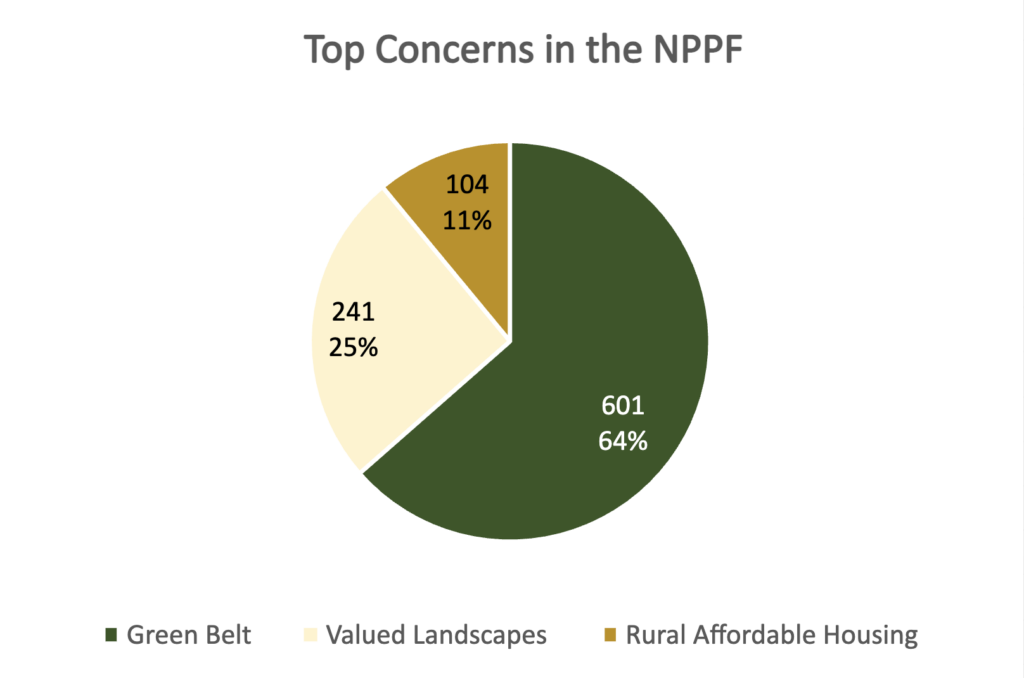
While all three issues are closely connected, the results show just how strongly people across England feel about the need to defend the Green Belt. This national support is reflected on both a local and regional scale.
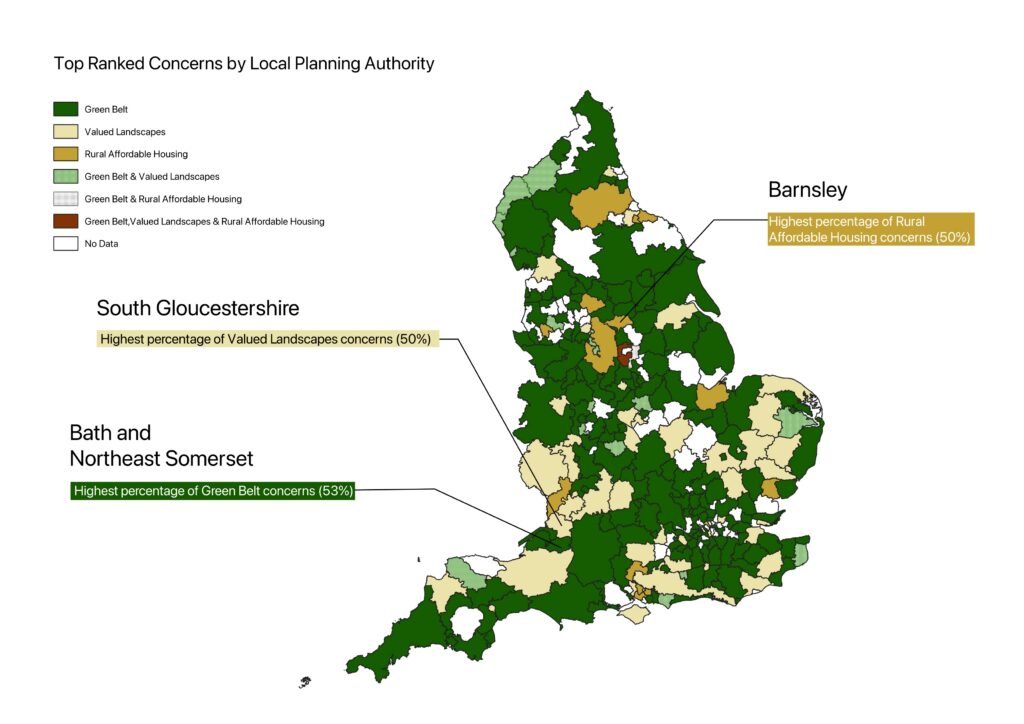
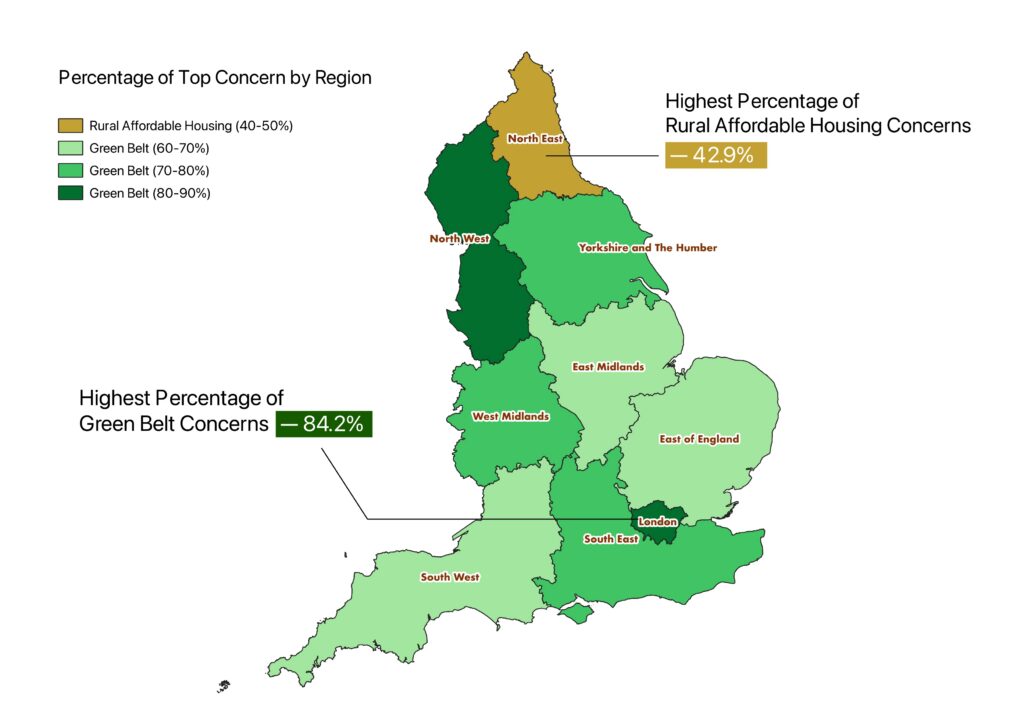
Green Belt: a national concern, not just a local one
In many cases, LPAs with the highest levels of concern about the Green Belt correspond with areas containing designated Green Belt land. This is unsurprising: people living near Green Belt see directly the pressure it faces.
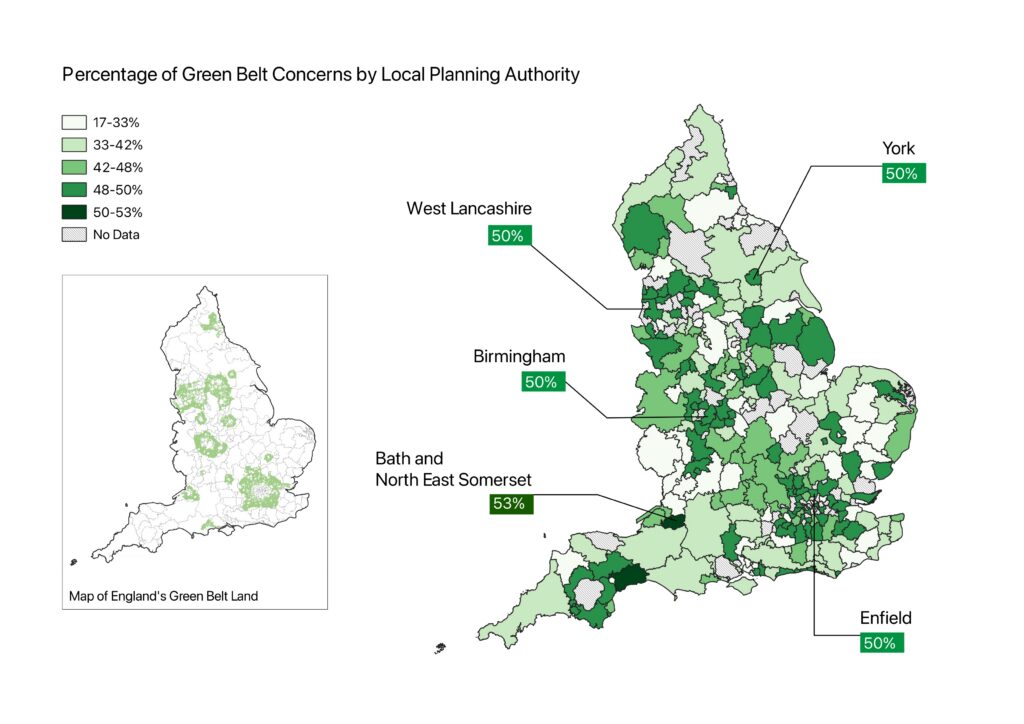
However, the data also reveals that LPAs such as East Devon, which do not have Green Belt designation, recorded high levels of concern over Green Belt protection. This suggests that Green Belt is widely seen as a national public good, not simply a local planning designation.
CPRE’s work on the Green Belt
Green Belts were first championed by CPRE in the 1930s to prevent sprawl and protect the countryside. The strength of feeling revealed by this campaign shows that people want that legacy upheld — and strengthened — for the future.
CPRE has long argued that strong Green Belt protection must go hand‑in‑hand with making better use of previously developed land. Our State of Brownfield 2025 report shows that enough brownfield land exists to meet housing need without sacrificing countryside, challenging the idea that Green Belt release is an unavoidable by-product of solving the housing crisis.
CPRE recognises that one of the greatest threats to our Green Belt is the ‘grey belt’ policy. Our research found that many developments labelled as ‘grey belt’ are in fact planned on unspoilt countryside — exposing how green the ‘grey belt’ often is and reinforcing the case for stronger national protections for greenfield land.
Valued landscapes: deeply local, widely cherished
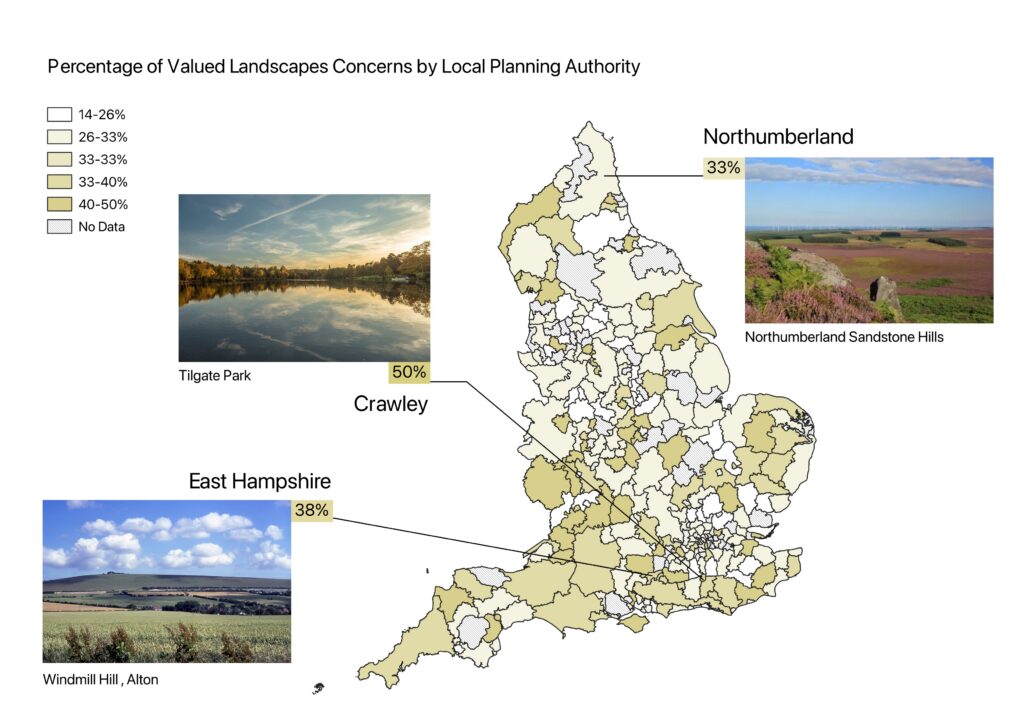
Concerns about valued landscapes tended to be highest in areas with locally significant landscapes, pointing to this being a particularly place‑based issue. These findings reflect how strongly people feel about everyday countryside — not just protected sites, but landscapes that shape local identity and wellbeing.
CPRE’s work on valued landscapes
Public concern over threats to valued landscapes clearly align with CPRE. National polling shows that three‑quarters of people want stronger protections for the UK countryside, underlining local landscapes and green spaces as a mainstream public priority.
Valued landscapes play a vital role in nature recovery and access to green space. CPRE’s response to the Environmental Improvement Plan sets out why planning policy must support these goals, rather than erode them.
Rural affordable housing: local needs, local solutions
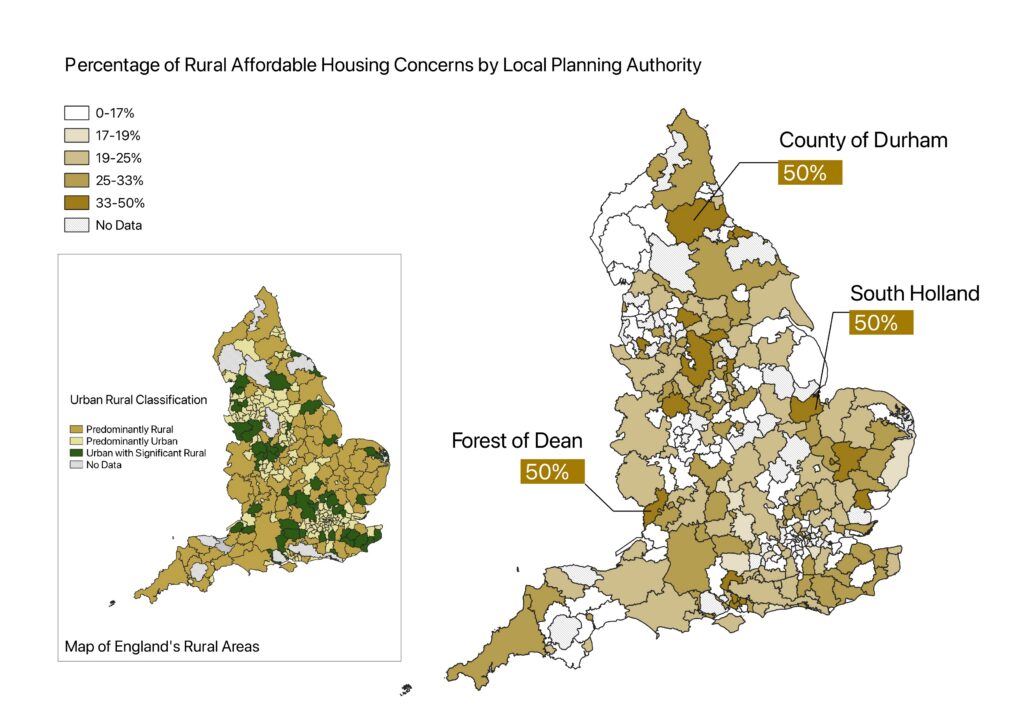
Concerns about rural affordable housing were most pronounced in areas classified as predominantly rural. This reinforces what CPRE has long argued: rural housing pressures are distinct and require tailored planning solutions.
CPRE’s work on rural affordable housing
CPRE’s rural affordable housing campaign calls for homes that meet local needs, are genuinely affordable and are delivered in locations that support existing communities rather than undermine them.
Our work on the high cost of country living shows how a combination of rising house prices, low wages and limited affordable supply is hollowing out rural communities and pushing local people out.
The scale of the problem is set out in CPRE’s State of Rural Affordable Housing report, which provides evidence that current planning approaches are failing rural areas and need urgent reform.
What happens next: Phase II of the campaign
With the NPPF consultation closed, Phase II of our campaign is now underway. We are working with local CPRE groups across England, sharing MP letter templates and our full, detailed survey findings to support you in influencing decision-makers as we await the NPPF’s conclusion.
If you took part — or want to get involved — now is the time to act. Speak to your local CPRE group to craft personalised messages to your MP, and help ensure the final NPPF reflects the care, ambition and concern shown by hundreds of people across the country.
Together, we can keep pressing for a planning system that truly protects the countryside for generations to come.