


Rayner’s 1.5 million homes target was built on the wrong foundations

It came as no surprise when Angela Rayner told BBC’s Sunday with Laura Kuenssberg last week that the government had only a ‘slim chance’ of hitting the 1.5 million homes target.
Rayner blamed ‘headwinds’ including the war in Iran and rising construction costs. Both are real problems, but they do not explain why hitting the target was always going to be a struggle. The issue sits much closer to home – in the way the target itself was conceived.
A number shaped by the market, not by need
Big housebuilders successfully lobbied the government for a formula for calculating housing numbers that would maximise their profits. The way the formula translates 1.5 million homes into targets for individual areas of the country is a political construct, not a measure of real housing need.
Ask most people how they think housing numbers are calculated for individual local authorities and they would presume it had something to do with the need for homes. Sadly not. The national target, as others before it from all parties, is a political one, and deciding where homes are most needed is led by the market, not demand.
This approach has piled disproportionate pressure onto rural areas with no evidence that these are where homes are needed. It encourages developers to build the kind of car-dependent ‘executive’ homes – on green field sites – that do nothing to fix the UK’s housing affordability crisis.
Brownfield availability proves we don’t lack space
Part of the trouble is that we plan for housing in isolation from other issues. In reality, the same finite hectares of English land are being asked to deliver new homes, food security, nature’s recovery, climate resilience and new energy infrastructure – often through entirely separate planning processes that do not take each other into account.
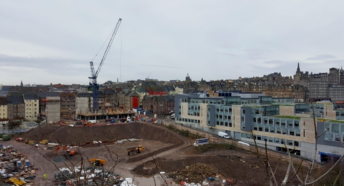
None of this means we lack the space for much-needed new homes. Quite the opposite. CPRE’s latest State of Brownfield research shows there is enough brownfield land in England for more than 1.54 million homes, of which a huge proportion would be viable with the right policy approach in place.
We’ll be publishing more work on the economics of brownfield later this year. Early findings make one thing clear: there are lot of myths told about the viability of brownfield sites. But although homes built on the vast majority would be profitable, developers can make more money from green field sites. But at what cost to our countryside and the public purse?
Some 846,000 potential new homes on brownfield already have planning permission but haven’t yet been built. The number of available brownfield sites has grown every year since 2018, when CPRE first began tracking it. At the same time, the amount of our countryside lost to development grows each year, with the UK ranked the fifth worst country in Europe for green space lost relative to its size.
The amount of greenfield land used for new homes relative to the number of homes built has increased by three-quarters since the early 2000s. The government could do more to shift the dial. Instead of the catch-all target of 1.5 million, we target for brownfield homes. Incentivising ‘carrots’ for developers could help but a clearer framework and targets that are more land savvy and prioritise brownfield delivery would be even better.
A crisis of affordability, not supply
The instinct in Westminster is to treat every housing shortfall as a growth problem – build more, anywhere, as fast as possible. Yet building homes should never be seen only through the lens of growth. Instead, it’s about creating sustainable places and lives for the future. The housing crisis in this country is, at heart, a crisis of affordability.
For decades, social homes have been sold off and not replaced, while homes considered ‘affordable’ by Westminster are often laughable in the areas where the affordability crisis is most acute. That’s particularly true in rural areas where the gap between average wages and house prices is so wide (and getting worse).
Nor is the government’s grey belt policy doing anything to meet the real challenge of the housing crisis. Building more detached homes on the edge of the Green Belt will not get a single young family out of bed and breakfast accommodation. Grey belt is an existential threat to the Green Belt, a protection CPRE fought to see introduced more important than ever for a country facing a climate and nature crises.
And there’s one purpose of the green belt that has been conveniently forgotten, and that’s to stimulate urban regeneration. So making the most of brownfield land and protecting the green belt have always been inextricably linked.
Let places set their own numbers
Rayner’s admission is a chance to change course, not lower expectations. Instead of Whitehall imposing a developer’s dream target, housing numbers should be set locally and not by central government. In the spirit of devolution, why not give mayors and strategic authorities the responsibility to set housing targets for their areas based on a genuine assessment of the needs of their local areas.
We need to recycle land. The evidence is clear that this not only makes sense, but it could also support growth and regeneration. What has been missing is the political will to build the right homes, in the right places, for the people who actually need them. Ministers should stop chasing a target built on the wrong foundations and use this moment to finally get it right.
About the author
Roger Mortlock is CPRE’s chief executive officer.