


What are data centres, and why are we asking for a pause on them?
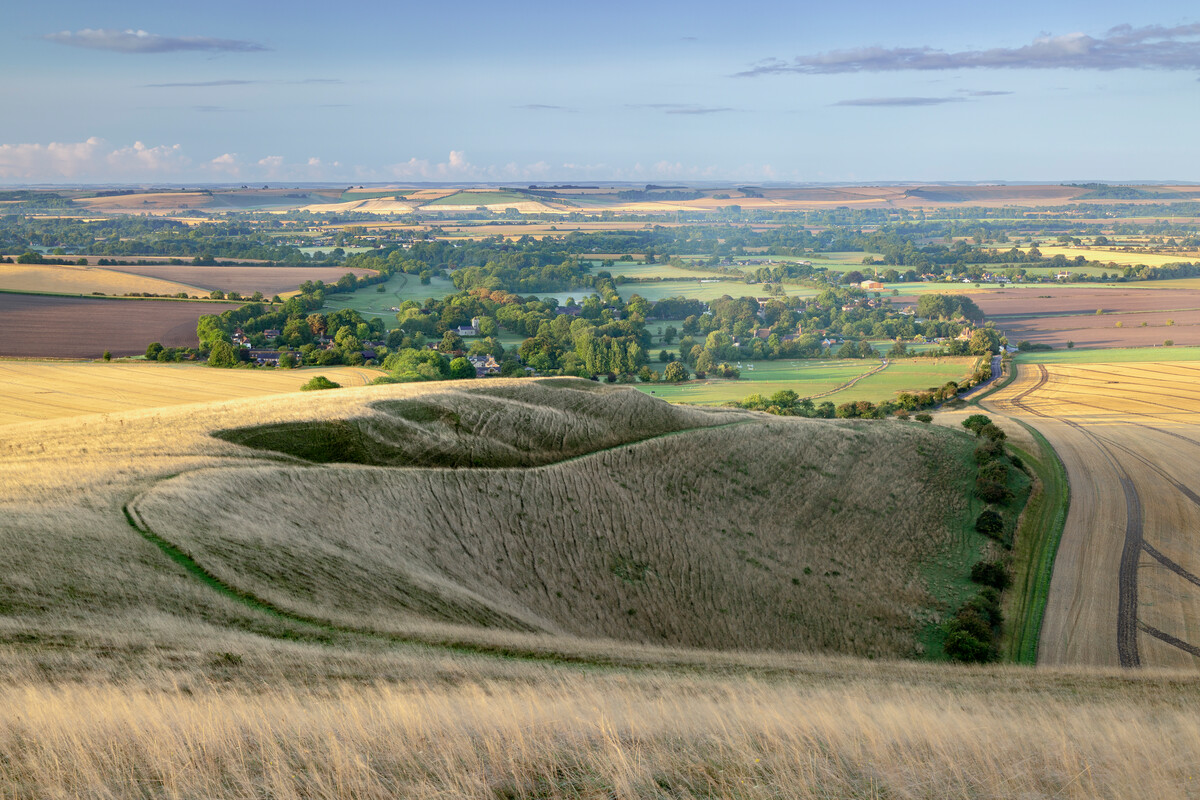
Land is finite. And yet whether it’s producing food, nature recovery, new homes or tackling climate change, we’re asking more of it than ever before. Data centres are a new pressure on the same finite land — and a potentially significant drain on water and energy. They’re arriving faster than the rules that govern them — and increasingly, they’re landing in the countryside.
Without dedicated planning rules and joined-up land use decisions, landscapes, farmland and nature are all at risk from data centres, and the communities most affected could be ignored when it comes to approving them.
That’s why we’ve launched an action asking the government to press pause on the unchecked development of data centres until there’s a proper plan for them. But what are data centres? Why are we talking about them now? And what do they mean for the countryside, communities and our environment?
Stand with us and call for a plan on data centres
What are data centres?
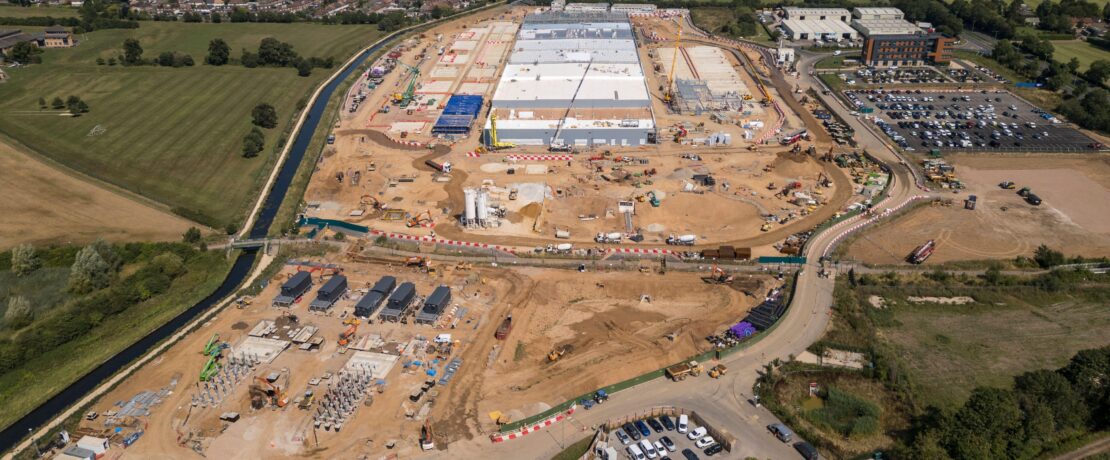
Data centres are facilities that house computer systems and the equipment needed to store and process digital data. They’re basically buildings full of computers, servers and lots of cables. They’re the physical infrastructure behind almost everything we do online. They range in scale from smaller sites to vast, hyperscale data ‘campuses’ which can be the size of hundreds of football pitches.
Data centres aren’t new. In fact, we’ve had them as long as we’ve had information technology. Right now, most of them power our day-to-day digital lives, like streaming, email, social media and online banking.
While most of the data centres in operation right now support the sort of ‘conventional’ computing we’ve mentioned above, the government’s own projections expect AI to drive most of the growth in data centre capacity going forward. And that’s probably not a surprise to you: everyone’s talking about AI, tech giants are aggressively developing and pushing for AI innovation and growth, and large language models like ChatGPT are now among the most visited websites globally.
Largely due to this race to build capacity for AI, we’re seeing a huge increase in applications for data centres. And some of the largest proposals are in the countryside.
How many are there? How many are proposed?
No-one seems to know an exact figure, so we only have estimates. The Town & Country Planning Association (TCPA) estimates there are about 500 data centres in the UK. Finding out how many are on the way is even trickier, but can be looked at in two ways: the planning system and the grid queue.
Evidence from a joint NGO response to the Environmental Audit Committee and recent estimates suggest that there are between 100-200 proposed data centres in the planning system. Recent Ofgem analysis suggests there are around 315 data centres in the grid queue seeking roughly 73 gigawatts (GW) of power between them. To put that into context, according to the National Energy Systems Operator (NESO), Britain’s peak electricity demand last winter — the highest it got, on a cold January evening — was about 45 gigawatts.
There’s no single source of truth on any of this, and estimates are changing all the time. That’s part of the problem — no government body is properly tracking how many data centres there are in the pipeline.
Why is this an issue now?
As we’ve said, we’ve had data centres for a long time. But what’s changed is the scale and pace at which new proposals are arriving. Many of the schemes coming forward now are substantially larger than what we’ve seen before. Examples include about 344 hectares (850 acres) in North Devon (a UNESCO Biosphere) and 218 hectares (539 acres) of Green Belt in Havering. That’s hundreds (and hundreds) of football pitches of open countryside, including productive farmland.
But data centres aren’t the only thing competing for our finite land. They join a long queue of other things too: food, homes, nature, energy, transport. At the same time, the climate and nature crises are putting more pressure on land than ever before. Without a joined-up plan, decisions about land — like new infrastructure — happen in isolation; helping to solve one problem, but creating several others.
Like other large infrastructure, these new data centre proposals represent a real risk of significant loss of countryside, farmland and valued landscapes. And even protected land like the Green Belt is at risk.
It’s not just how big these schemes are. It’s the rate at which they’re arriving, and the fact that the rules have been changed which could see more get waved through without the proper checks and balances.
What rules have changed?
In January 2026, regulations brought data centres into the Nationally Significant Infrastructure Projects (NSIP) regime. Developers who choose to opt in to this can sidestep meaningful local scrutiny and have the final decision made by the Secretary of State (through what’s called a Development Consent Order, or DCO). This essentially means that the final decision to approve or reject a scheme is taken away from the people who would be most affected, and made by central government instead.
There aren’t currently any thresholds or rules for which sites can opt in to the NSIP scheme. That’s expected in the government’s National Policy Statement on data centres, which as of October 2026 hasn’t even been published yet.
In short: data centres are arriving quicker than the rules that are supposed to govern them. This means proposed data centres — especially the larger campuses — could get quickly waved through, with enormous consequences for local communities: from persistent noise pollution to loss of countryside, farmland and precious landscapes.
And what about energy and water use?
It’s been widely reported that data centres can use huge amounts of water and energy. City Hall’s own figures shows that London’s data centres alone use as much power as 750,000 homes, which puts pressure on already-strained grid infrastructure. Remember — there are hundreds more queueing for around 73GW of grid capacity. Some aren’t waiting for the grid at all and are even seeking their own on-site gas power, including a proposal in Buckinghamshire. That means more fossil fuels locked in.
When it comes to water, even a medium sized data centre can use hundreds of millions of litres of water a year. Research from Global Action Plan suggests that most of the planned data centres are in areas that are already water stressed or heading that way. Some data centre cooling systems even draw from potable (drinking) water supplies.
We’re facing multiple environmental crises at once: climate change is here, and the UK is one of the most nature-depleted countries in the world. Without a joined-up plan and high environmental standards in their design, data centres could make both worse.
And at the moment, nobody can say by how much. The data on this is variable, highly contested and there’s no single source of truth — especially when it comes to water usage. The evidence does point to the fact that some data centres are incredibly energy- and water-intensive. We’re being asked to accept the impact without being allowed to measure it.
So what is CPRE asking for?
New data centre proposals are coming through at pace, and some of them could be waved through with little opportunity for local people or councils to have their say. There are no planning rules written explicitly for data centres, and we still don’t even have a policy which governs how decisions are made about where they go and how they’re built.
In short, we’re asking for a pause on unchecked data centre development until there’s a proper plan for them. We think the government can start with the following:
- a brownfield-first policy for data centres, so that more countryside, landscapes and farmland is protected
- dedicated planning rules so that the environmental and landscape impacts are properly assessed. That means full transparency on water and energy they use, alongside the impact of noise, heat, light and air pollution on people and nature. These rules should also ensure the people most affected get a meaningful say in shaping what happens in their area.
- innovative data centre design which minimise the scale of the development, and its impacts on landscapes and resources.
- climate targets protected so that data centre development doesn’t push them out of reach and cause emissions to spiral.
Some of this could be wrapped up in the National Policy Statement for data centres, so we’re calling on the government to launch a consultation on this policy urgently.
How you can help
If you agree with us that data centres need proper rules so that we can protect nature, farmland and landscapes, then add your name here. We’re in the process of developing a powerful campaign — and until then, adding your name (and signing up to receive emails from us) is the best way you can keep up to date. You’ll even have a chance to shape what our data centre work could look like as we’ll be launching a survey — but be quick as the survey won’t run for long!