



Data centres
Data centres risk a land crisis like never before. Help us sound the alarm before it’s too late.
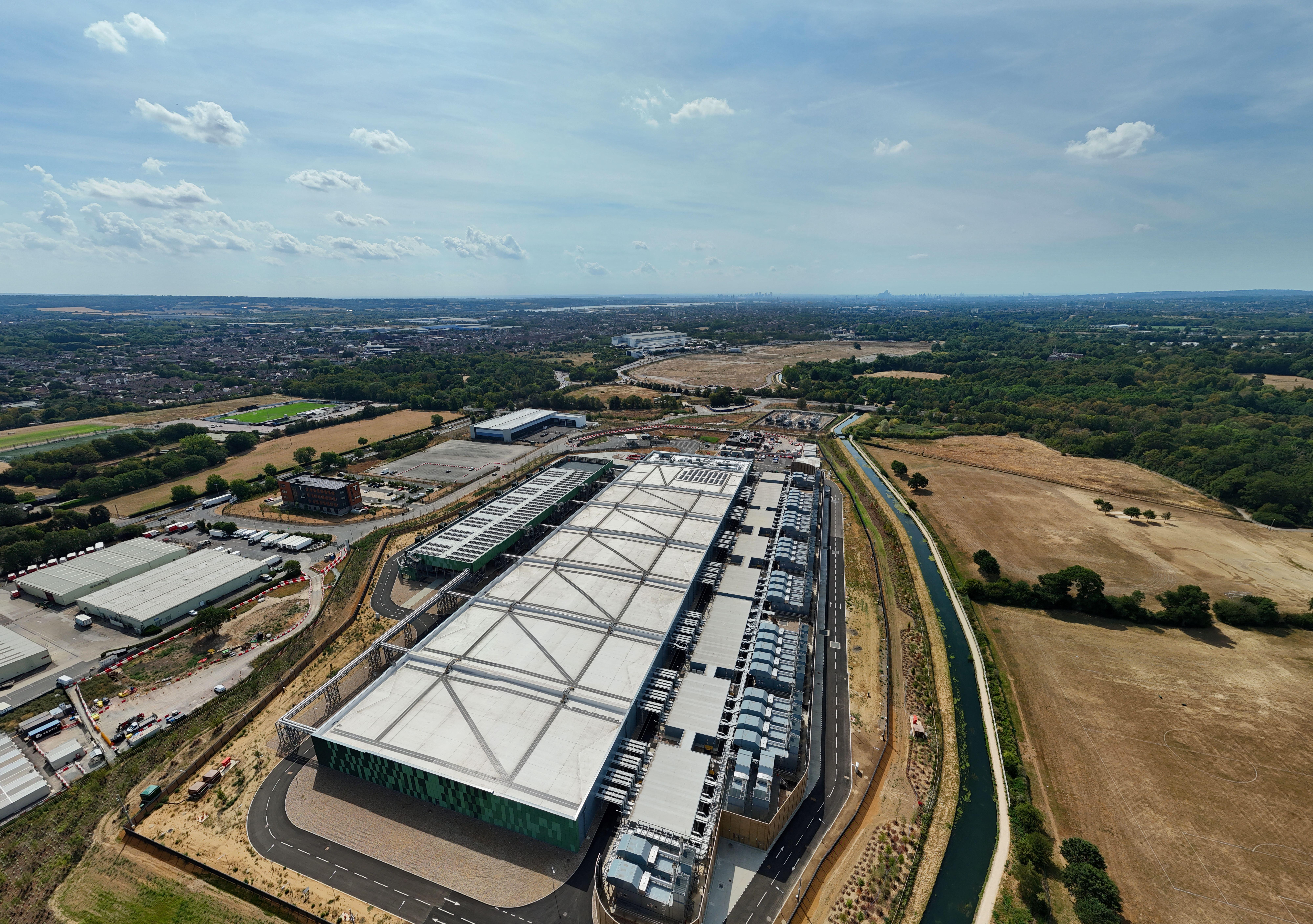
In the race to build capacity for AI, England is seeing a huge increase in applications for large-scale data centres. But there’s no plan to guide where they go, or how they’re built and run, meaning the countryside could become a dumping ground for these massive, water- and energy- intensive developments. The risk is a land crisis like never before, with huge impacts on landscapes, tranquility, nature and health. That’s why we’re calling for a pause to unchecked data centre development.
We’ve had data centres for as long as we’ve had information technology (IT). Their numbers (and efficiency) have grown as our use of the internet has grown. But the current boom in data centres isn’t just down to ordinary demand. It’s also being driven by the race to build AI capacity, which could account for around 70% of all UK data centre capacity by 2035.
AI could help address some of our biggest challenges. But data centres, along with homes, energy, transport, food and nature, are all competing for the same finite supply of land. With no plan to guide their development, we could be walking into a land crisis.
Data centres consume huge amounts of power. London’s data centres alone use as much power as 750,000 homes. Some are even seeking their own on-site gas power generation rather than waiting for an already overstretched grid — meaning more carbon emissions locked in for decades.
But it’s not just energy. Even medium-sized data centres can use up hundreds of millions of litres of water a year — and some systems even use drinking water. Worse still, Global Action Plan’s 2026 report suggests that most data centres planned in the UK are in water-stressed areas. This just doesn’t make sense.
Where data centres go matters too, and so do the communities who will be most affected by their development and operation. And yet, the rules are being rewritten to push them through even faster. Some schemes can opt into the Nationally Significant Infrastructure Project (NSIP) scheme designed to fast-track these kinds of projects. That means some data centre developments could bypass local councils and local people before the government has even published the policy designed to govern them. Community voices are being swept aside in the gold rush and — once again — the countryside is treated as expendable.
There are at least 100 data centres in the pipeline, but no government body tracks them, and information about their resource consumption is scarce. We need to press pause on unchecked data centres before we sleepwalk into a land crisis like never before.

What we want to see
Data centres are important infrastructure and support many aspects of our day-to-day lives. But the frantic race to build new, hyperscale data centres does not mean they should be free from rules and regulations. And there needs to be a proper plan and proper policies to guide their development. Without these, we’re risking a barrage of unchecked data centre development, without scrutiny or community involvement, with potentially devastating impacts for nature, landscapes and farmland. We’ve set out five things we want to see happen before data centres get out of hand.
Data centres need to be in the right place, with proper rules and high environmental standards. No ifs, not buts.
If you agree with us, add your name and let’s sound the alarm, before it’s too late.