


CPRE Devon spearheads the movement against the Devon Data Campus
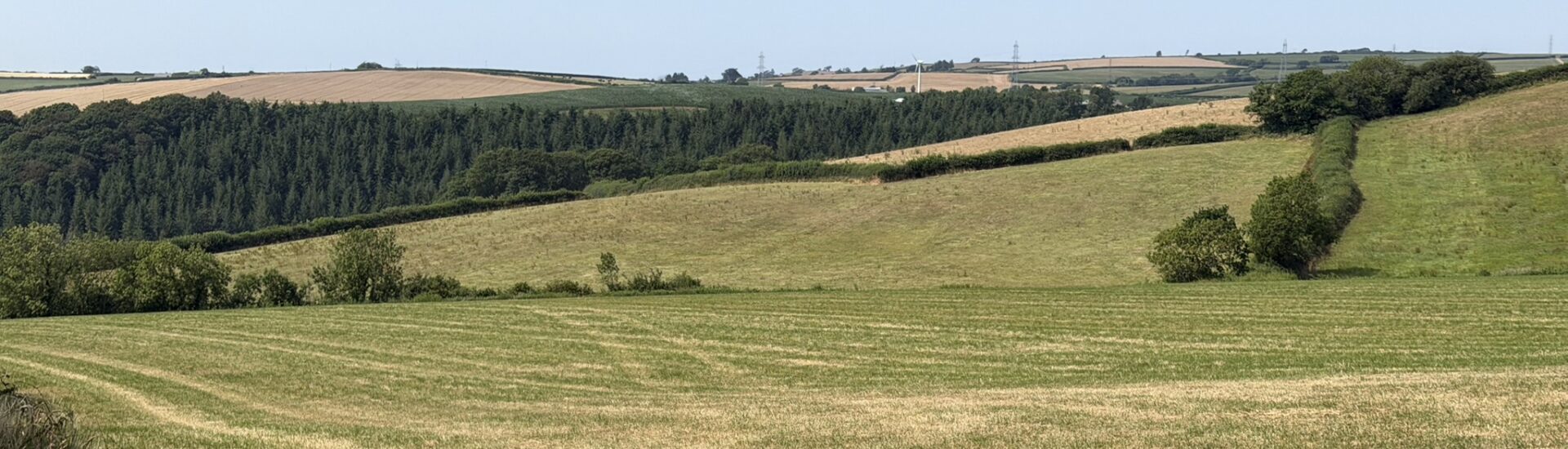
CPRE Devon and Devon Data Centre and BESS Action Group are campaigning against a data centre project, raising concerns about its impact on farmland, landscapes, wildlife and local communities.
In the tranquil area between Weare Giffard, Huntshaw and Great Torrington in Devon on an unspoilt hillside within direct sightline of the historic town of Great Torrington, a developer wants to build a hyperscale data centre over 850 acres – around half the size of Gatwick Airport.
Driven by a longstanding commitment to protecting the countryside and their extensive knowledge of planning policy, CPRE Devon joined forces with the Devon Data Centre and BESS Action Group to oppose the construction of the Devon Data Campus, announced in June 2026.
So far, they have distributed 15,000 leaflets, 900 weatherproof boards and spent the summer months campaigning from their stand at four country shows across Devon. CPRE Devon’s short film Say No has been viewed more than 54,000 times online.
What is the Devon Data Campus?
Proposed by the developer Xlinks, the Devon Data Campus consists of five hyper-scale AI data centres – buildings of up to 130 feet tall – housing around 120,000 computers operating day and night that will need 2.9 billion litres of water a year to cool the servers.
Alongside this, a 96-acre battery park, consisting of at least 1,700 containers holding up to 16 million lithium-ferrous-phosphate batteries. Xlinks claims the Devon Data Campus will create between 650 and 1,200 new jobs.

Why does the local community oppose the project?
The government has identified five former industrial areas as ‘AI Growth Zones’ – Teesside, Lanarkshire, the former Ford plant at Bridgend in South Wales, the area of North Wales close to the Wylfa Small Nuclear Reactor site, and Culham in Oxfordshire.
CPRE is calling on the government to introduce dedicated planning rules for data centres and a proper plan to guide their development. That means prioritising suitable brownfield sites instead of 850+ acres of much-needed countryside, which will impact the local environment, ecology, wildlife, food production and a peaceful landscape. It could put North Devon’s UNESCO Biosphere status at risk – of which both the developer and the Torridge District Council are aware.
CPRE is also calling for the government to encourage innovative data centre design, so that their scale, landscape impact and resource usage are minimised. Building data centres the right way means using cooling systems that do not need 2.9 billion litres of water when water is scarce in some areas of the country. The people who live in the area fear the development could have significant impacts on local amenities, including noise, landscape change and tourism.
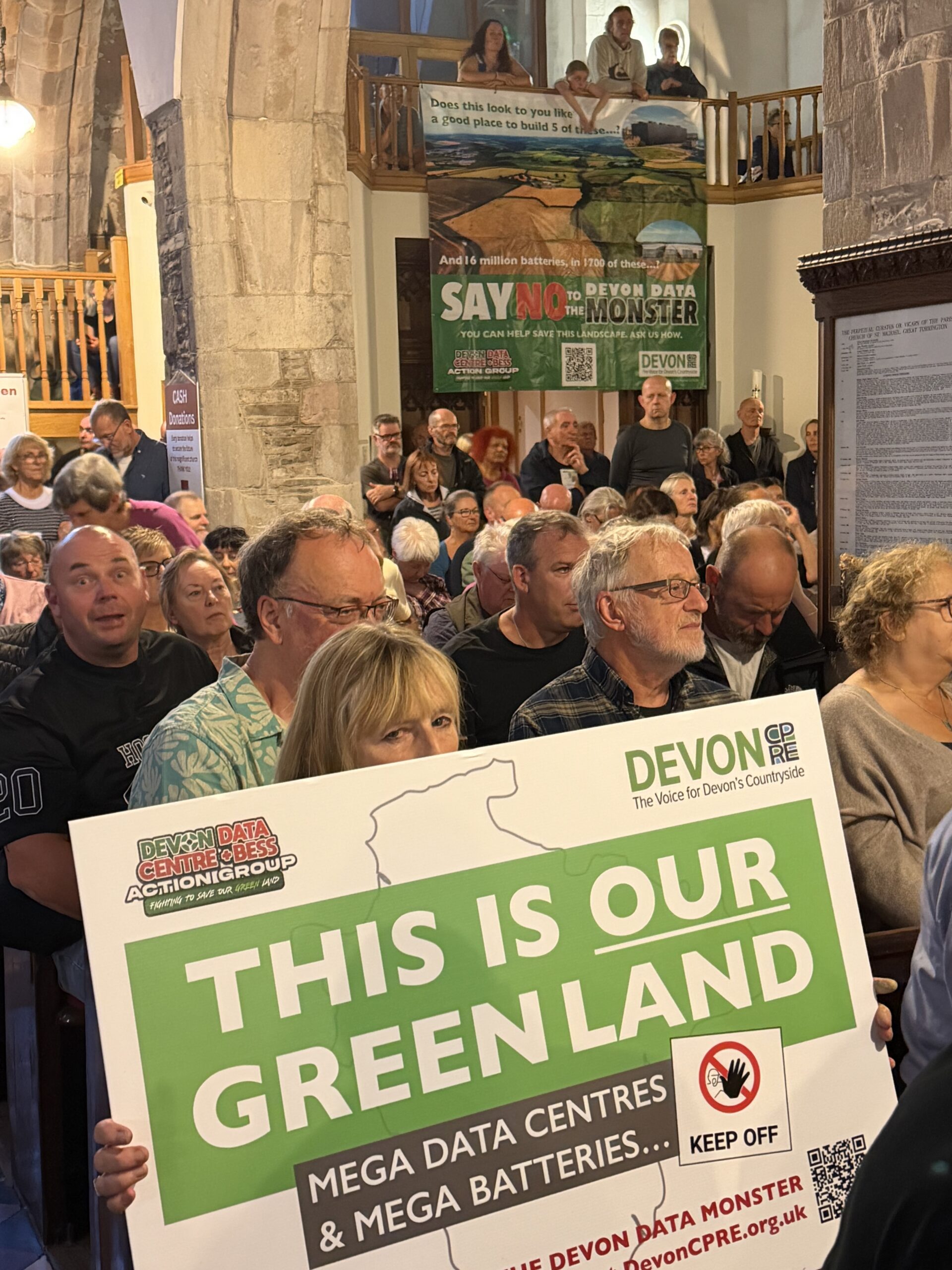
Data centres need to be built in the right places with proper rules high environmental standards. The Devon Data Campus falls way short, and that’s why there’s so much local opposition.
Find more about CPRE Devon’s campaign here. If you agree that we need to pause data centre development until the government has a proper plan and rules for them, add your name here.