


Time for a new housing market – and new targets

For decades, housing policy has focused heavily on targets and numbers, while paying far less attention to the structure of the housebuilding market itself. If ministers are serious about delivering both more homes and better places, they need to look beyond how many homes are built and consider who delivers them, where they are built, and whether the system is serving communities as well as housing statistics.
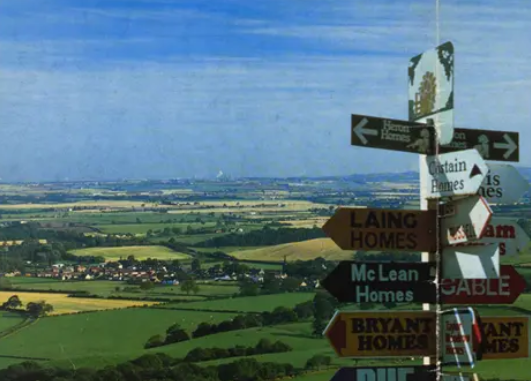
It looks like Housing Minister Matthew Pennycook is falling out of love with the volume housebuilders. In a tweet on X this week, he recognised the dominance of speculative development (ie housing delivered outside the local plan) and recognised that ‘the disruption and transformation of the housebuilding market is essential to delivering high and sustainable rates of housebuilding’. We agree, and what’s more, we think that shifting who delivers new homes and communities is more likely to deliver better outcomes for the countryside. More, smaller housing schemes, more of them on brownfield land, and more of them delivered by small and medium sized builders.
Since the 1980s, CPRE has been raising the alarm about the dominance of large developers and the negative impact on the countryside of their greenfield first economic model. It’s got worse again, thanks to a flawed algorithm for calculating housing numbers introduced by this housing minister that has forced massive targets on rural areas, unrelated to need or demand. As a result, local authorities (especially in rural areas where targets have increased by up 400 per cent) are between a rock and a hard place. Every CPRE branch I talk to is facing huge rises in undemocratic, speculative development in our countryside – hardly any of it actually tackling the crisis of housing affordability. As Maidstone Borough Council told the Minister this week, setting ambitious targets doesn’t get homes built. But they do risk speculative development, ‘often in locations that lack the requisite infrastructure and/or disproportionately impact landscape and biodiversity’.
It doesn’t have to be like this. There’s huge innovation from Community Land Trusts and with smaller developers delivering schemes that respond to local need. And in the rest on continental Europe, over 50% at least of homes are delivered through custom or self-build. Here it’s less than 10%. We need to scale this up. The Housing Minister’s analysis is bang on, but in two years we haven’t seen enough from this government on what they will do about it. Being slave to a target that doesn’t make sense means being a slave to the volume housebuilders. There’s a real risk that at the end of this parliamentary term, housing delivery will look like business as usual at best, or at worst a spike in poorly planned, speculative rubbish. When as Nye Bevan said in the same job (and this is always worth repeating) ‘we shall be judged in 20 years not by the number of homes we have built, but by their quality.’
So, if the Housing Minister is serious about disrupting the influence of the big players, here’s some things we think he should prioritise:
- Speed up the build out rate on sites that already have planning permission. An MHCLG report to improve build out transparency was published in 2025 but there’s been no government response.
- Extend powers for local authorities to take action on the (at least) 500,000 empty homes in England. In February this year, the Minister said he wanted to maximise the use of existing powers before introducing new ones, but surely this needs more urgency given the size of the prize.
- Recycle the 670,000 vacant or under-used historic buildings. The Culture Committee concluded the government is failing to prioritise the reuse of heritage buildings.
- Speed up the introduction of a mandatory registration for the 450,000 short term lets – many of these in rural areas like Cornwall facing a housing crisis. This was proposed in February 2024 but still waiting implementation.
- Give brownfield first some teeth and deliver on the manifesto promise of a brownfield first approach. There are been some great action, including brownfield passports, but so much more could be done with proper targets for brownfield, tax incentives and better data.
But the big-ticket item needs to be a rethink on that flawed algorithm for housing numbers. So much of the rise in speculative development and needless take of our precious countryside is down to that flawed target. In the spirit of devolution, why not give mayors, not central government, the control over the housing target and let them come up with a figure that makes sense to them and the people they serve?