


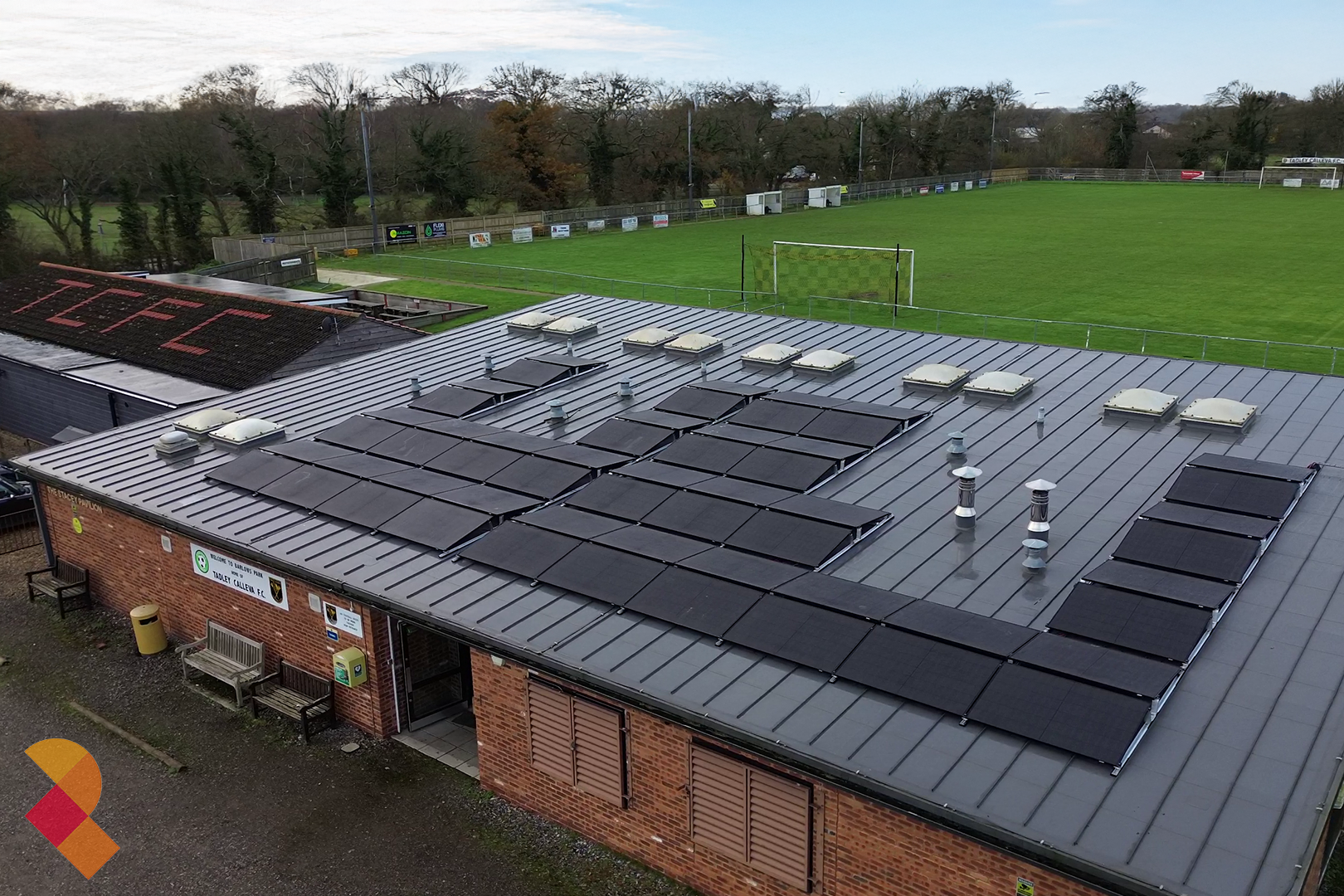

Barlows Park, a volunteer-run community sports facility in Tadley, Hampshire, faced a real threat to its survival with annual energy bills exceeding £12,000. A grant from the borough council’s Community Infrastructure Fund funded a 24.64 kWp rooftop solar array, installed by Spirit Energy despite a roof too steep for standard mounting, was solved with a bespoke posted mounting system that kept all 56 panels in place. A 13.5 kWh battery, installed internally with no visual impact, maximises how much of that generation the club actually uses. The system now saves Barlows Park £4,233 a year, with over £88,000 projected in savings across 20 years and 4,458 kg of CO2 offset annually; money that stays with the community rather than being lost to rising bills. The club, run entirely by volunteers on a shoestring, is already pursuing a second grant to replace its gas boilers, and has inspired other community facilities to follow its lead. The project also demonstrates how a council community infrastructure grant can make solar viable for a facility with no capital of its own to invest, a model Barlows Park has already recommended to other community centres.
Nomination details
Why this matters
Barlows Park in Tadley represents a compelling example of how a small, volunteer-run community facility in a rural setting can take meaningful action on energy sustainability with the right installer which can inspire others to follow.
The Barlows Park Management Association, operating entirely on grants and community contributions with annual energy bills exceeding £12,000, faced a very real threat to its long-term viability. Rather than accepting the status quo, the volunteers proactively sought out funding through the borough council’s Community Infrastructure Fund and partnered with Spirit Energy to deliver a fully integrated renewable energy system: a 24.64 kWp rooftop solar array, paired with a 13.5 kWh battery designed to keep the facility as grid-independent as possible to reduce carbon emissions and help fight climate change.
The impact on the local countryside community is tangible and lasting. The facility which is home to Tadley Calleva Football Club and a hub for local community activity now generates the majority of its own electricity, saving £4,233 per year and projecting over £88,000 in savings across 20 years. Those savings flow directly back into a facility that serves the local community, not into energy company profits. The installation also offsets 4,458 kg of CO2 annually, a meaningful environmental contribution from a single community site.
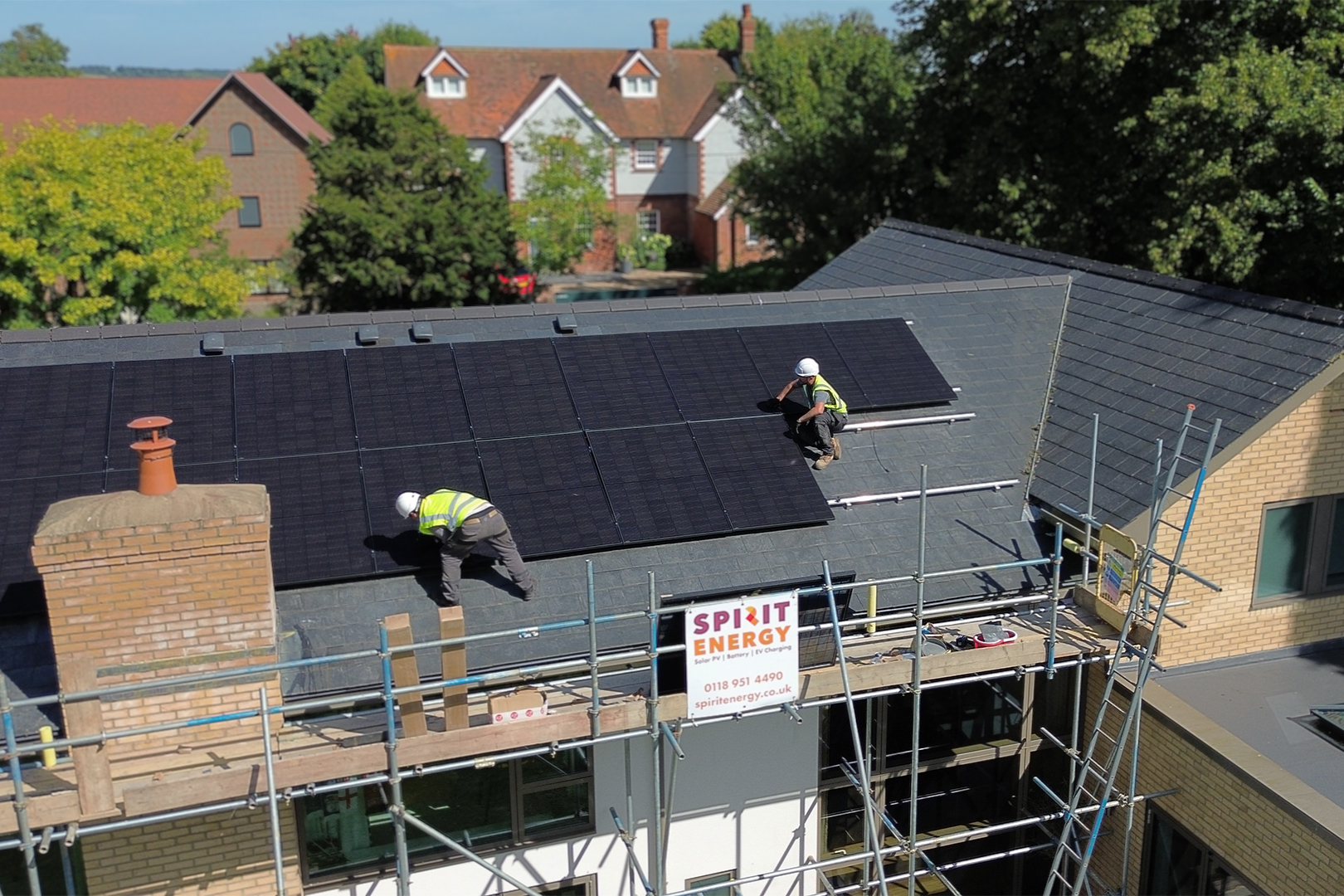
Spirit Energy’s contribution went beyond simply installing panels. Faced with a roof that was too steep for a standard ballasted system, their team engineered a bespoke posted mounting solution that maximised the number of panels on the roof without compromising the building’s structure which demonstrates the kind of problem-solving that turns a difficult project into an outstanding one.
Perhaps most significantly, the project has already rippled outward. Joe Slimin has personally recommended Spirit Energy to other community organisations considering similar projects, and Barlows Park is now pursuing further grants to replace its gas boilers with renewable-powered alternatives, embedding a culture of sustainability that will benefit the local countryside community for decades to come.
This is a demonstration that rural community facilities in the countryside, however modest their means, can become beacons of clean energy and environmental stewardship and that the right partnership can make that possible.
Impact
For the local community, the most immediate effect is the preservation of a vital shared space. Barlows Park which is home to Tadley Calleva Football Club and run entirely by volunteers and was under genuine financial pressure, with energy bills exceeding £12,000 a year threatening its long-term survival. The solar and battery installation has reversed that trajectory, saving £4,233 in its first year alone and projecting over £88,000 in cumulative savings over 20 years. Those savings are reinvested directly into the facility and the community it serves, rather than being lost to ever-rising energy costs.
Joe Slimin and the volunteer team now have a sustainable financial model that gives them a platform to plan for the future. They are looking to pursue a second grant to replace the site’s gas boilers with renewable powered alternatives, building on the success of the solar installation to go further. Our YouTube video about the installation here: https://www.youtube.com/watch?v=f-uTdPEmBlg means the positive impact is already spreading person to person across the local area.
The system offsets 4,458 kg of CO2 every year, reducing the facility’s dependence on grid electricity generated from fossil fuels. The ambition to replace gas heating with renewable alternatives in the next phase will push that figure further still, moving Barlows Park towards being a genuinely low-carbon community asset in the Hampshire countryside.
Taken together, the work of Spirit Energy and Barlows Park Management Association demonstrates that community-led renewable energy projects can simultaneously strengthen local facilities, empower volunteers, inspire neighbouring organisations, and meaningfully reduce environmental impact all from their own rooftop!
Inclusion and accessibility
When energy costs become unsustainable, rural community facilities close and the people who lose out most are those who depend on local, affordable amenities rather than travelling to larger towns or paying for private alternatives. Barlows Park was facing that pressure, with energy bills exceeding £12,000 a year threatening the long-term survival of a facility run entirely by volunteers for the benefit of the whole community.
By bringing those costs under control through solar generation and battery storage, the project directly protects the affordability and accessibility of the facility for everyone in the local area. The savings freed up by the installation give the volunteer management association the headroom to reinvest in the facility itself rather than spending too much money on energy bills. This means Barlows Park can stay open, welcoming, and accessible to all.
Beyond the site itself, the project sets an important precedent. By helping a local resourced community organisation navigate grant funding and delivering a technically complex installation within that framework, Spirit Energy has demonstrated that renewable energy is a realistic option for even the smallest rural facilities. Joe Slimin has already passed that message on, personally recommending the approach to other community organisations considering similar projects and helping to lower the barriers for countryside facilities across the region and making the benefits of clean energy more inclusive and accessible far beyond Tadley in Hampshire.