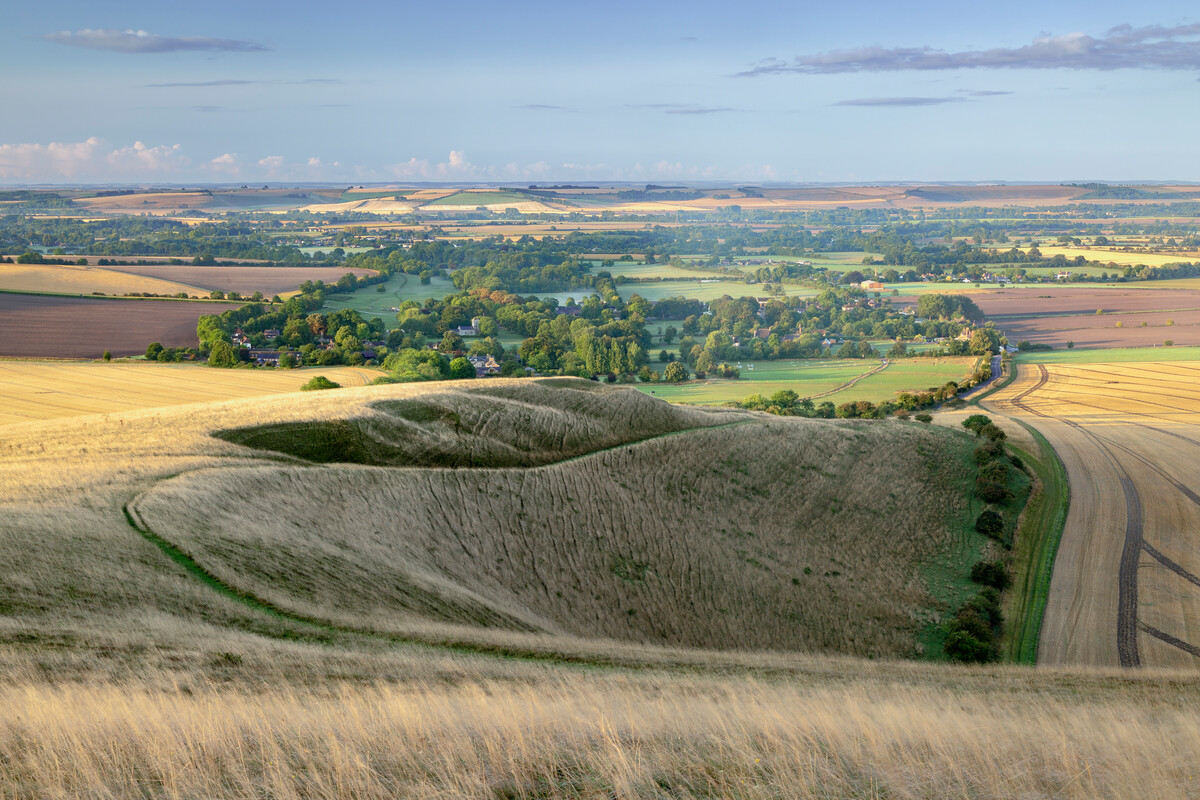


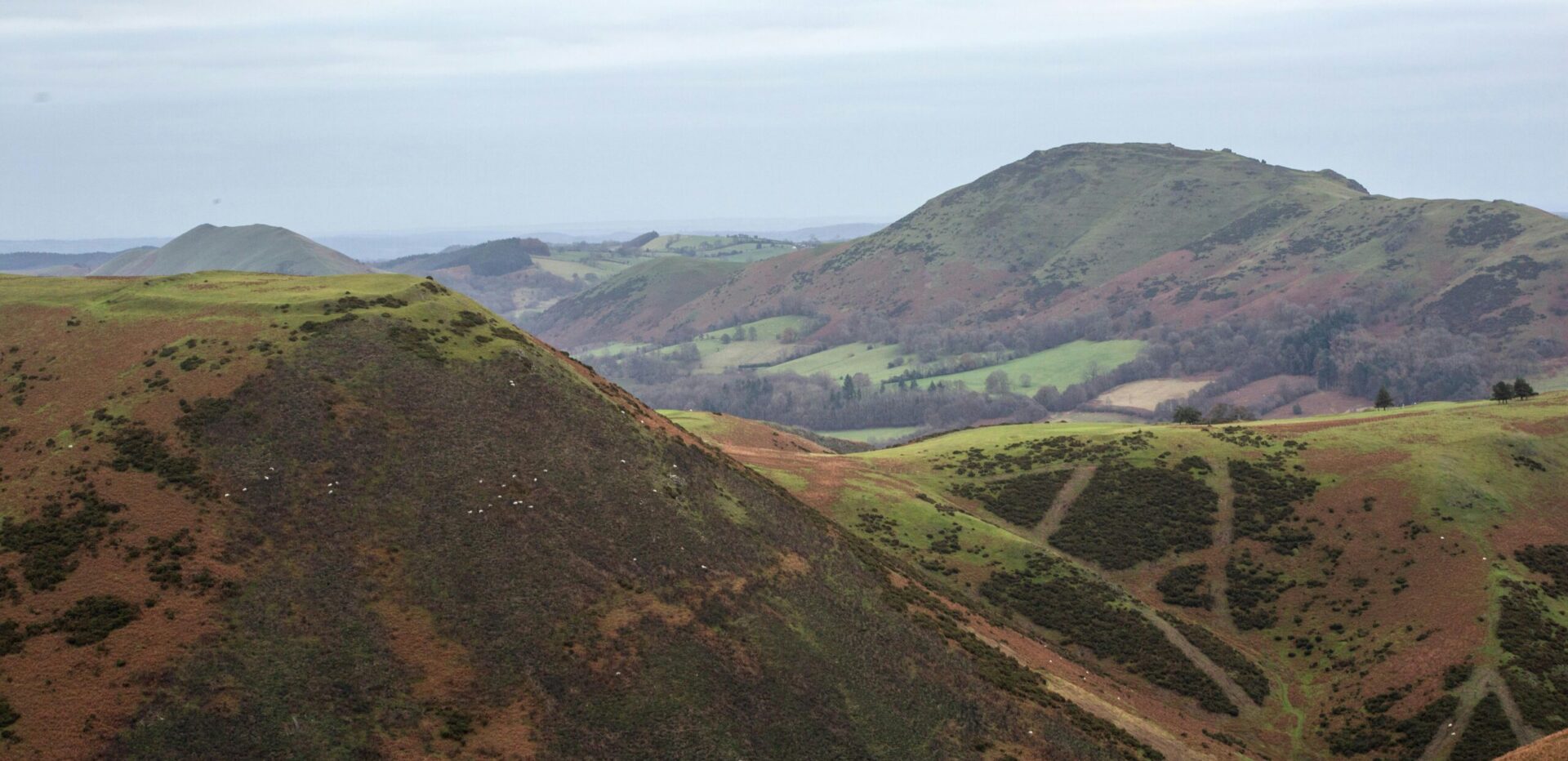
Discover the countryside: Shropshire
PLACE TO EXPLORE: Uncover Pitchford’s hidden history
CPRE Shropshire recommends Pitchford Estate, six miles south of Shrewsbury, where a 1,000-acre estate of arable farmland and woodland surrounds Pitchford Hall, a Grade I listed Tudor timber-framed mansion dating to around 1560.
After decades of dereliction, the hall was repurchased by its current owners in 2016 and is being restored under English Heritage guidance. Nearby, the estate’s church may stand on a Norman motte, according to CPRE Shropshire’s Historic Buildings Adviser Carole Ryan Ridout, though this has never been formally investigated. If true, the house itself would have been built in the castle’s bailey, a two-tier site as intriguing as it is easy to miss.
HOW TO EXPLORE: Ride the Shropshire Hills Shuttle Bus
The Church Stretton Shuttle Bus runs every weekend from May to September, connecting Church Stretton with the Long Mynd, Stiperstones and surrounding villages, giving hop-on, hop-off access to walking country including Carding Mill Valley, Stiperstones National Nature Reserve and the former lead-mining village of Snailbeach, without needing a car.
LOCAL EVENT: Celebrate hedgerows in the hills
CPRE Shropshire marks its centenary year with Hedgerows in the Hills, a weekend celebration of the county’s countryside and hedgerows at Acton Scott Heritage Farm on 24 and 25 October 2026, with walks, talks, hedgelaying demonstrations and a geology exhibit.
LOCAL SECRET: Walk through 700 million years in one county
Sally Green, CPRE Shropshire’s geology lead, has spent years showing people that the county’s landscape is also a timeline.
As part of CPRE Shropshire’s centenary year, six walks taking place across 2026 trace the county’s geological periods in the order the rocks were laid down: Precambrian rock at Pontesford and Earl’s Hill, Ordovician at the Stiperstones, Silurian at Wenlock Edge, Devonian and Carboniferous at Titterstone Clee, and finally Permo-Triassic desert sandstone at Nesscliffe Hill; formed when the county lay in an arid upland crossed by seasonal rivers.
It’s not just underfoot. Almost every Shropshire village once had its own quarry, and Sally points out that the county’s buildings “grow” from the rock and clay beneath them, so a walk through any village is, in a sense, a walk through its geology too. This year, she’s also collaborating with artists Andrew Howe and Molly Brown of The Landing Project to turn that story into an interactive artwork for CPRE Shropshire’s centenary events.