


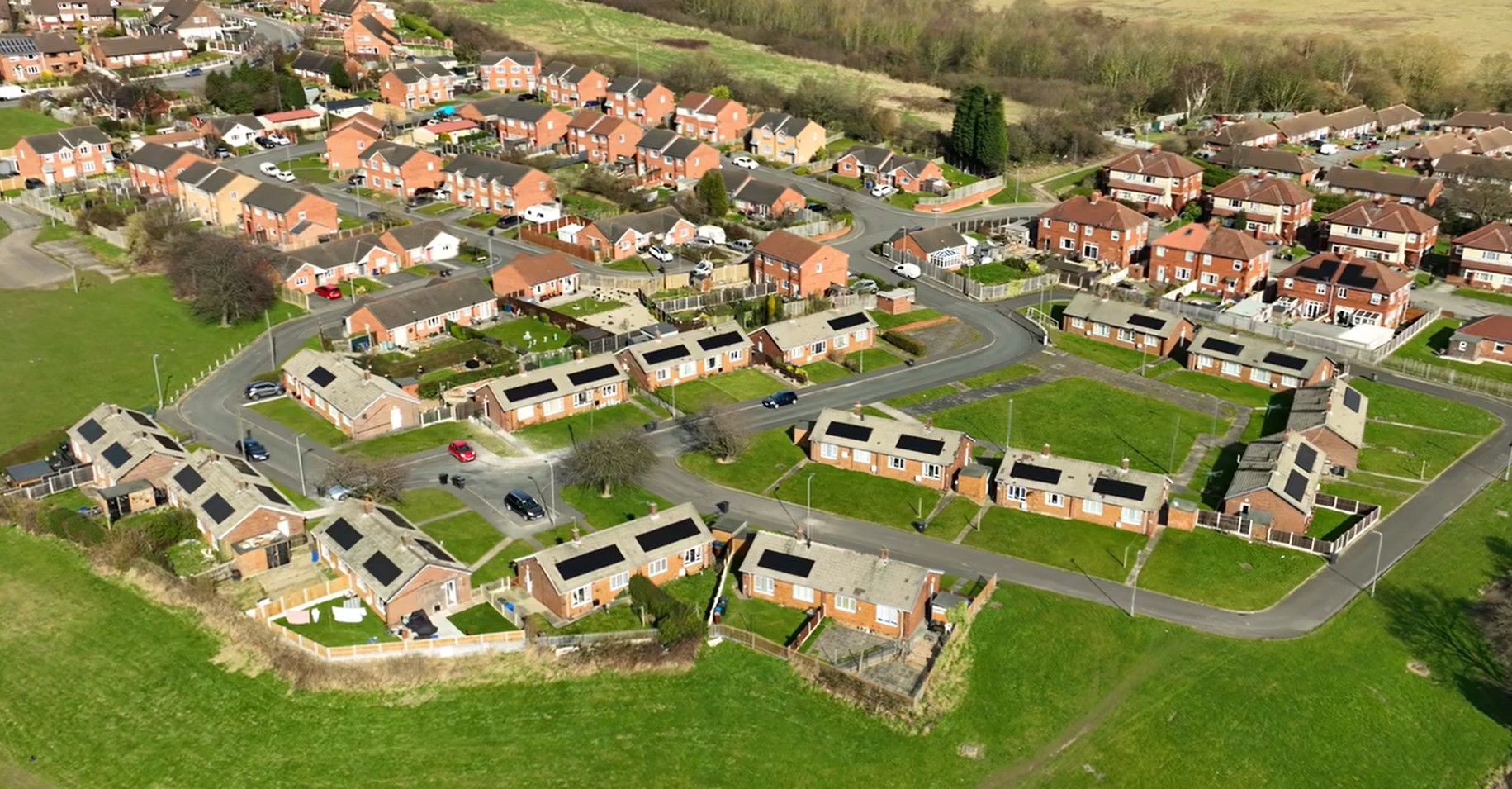

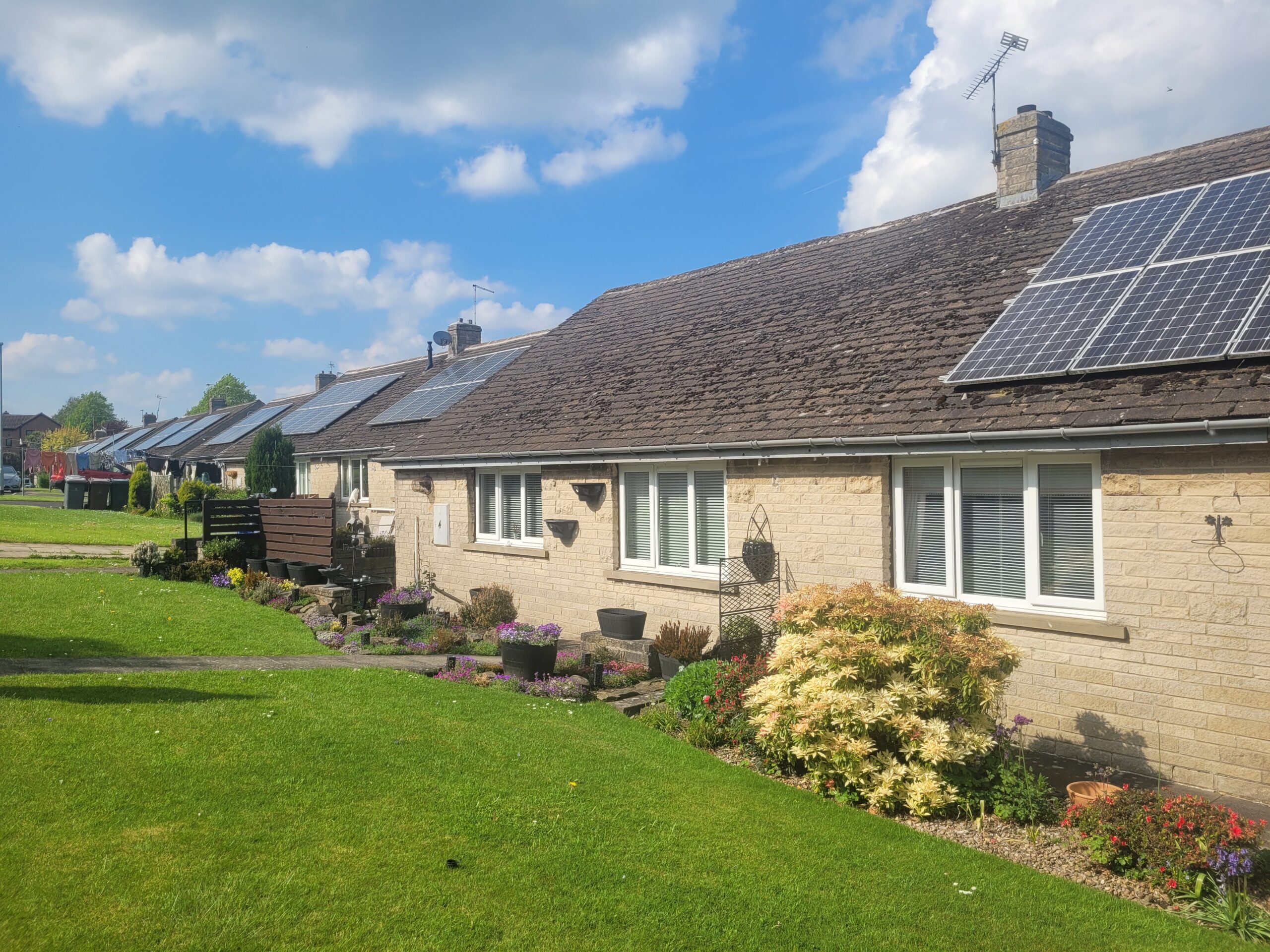
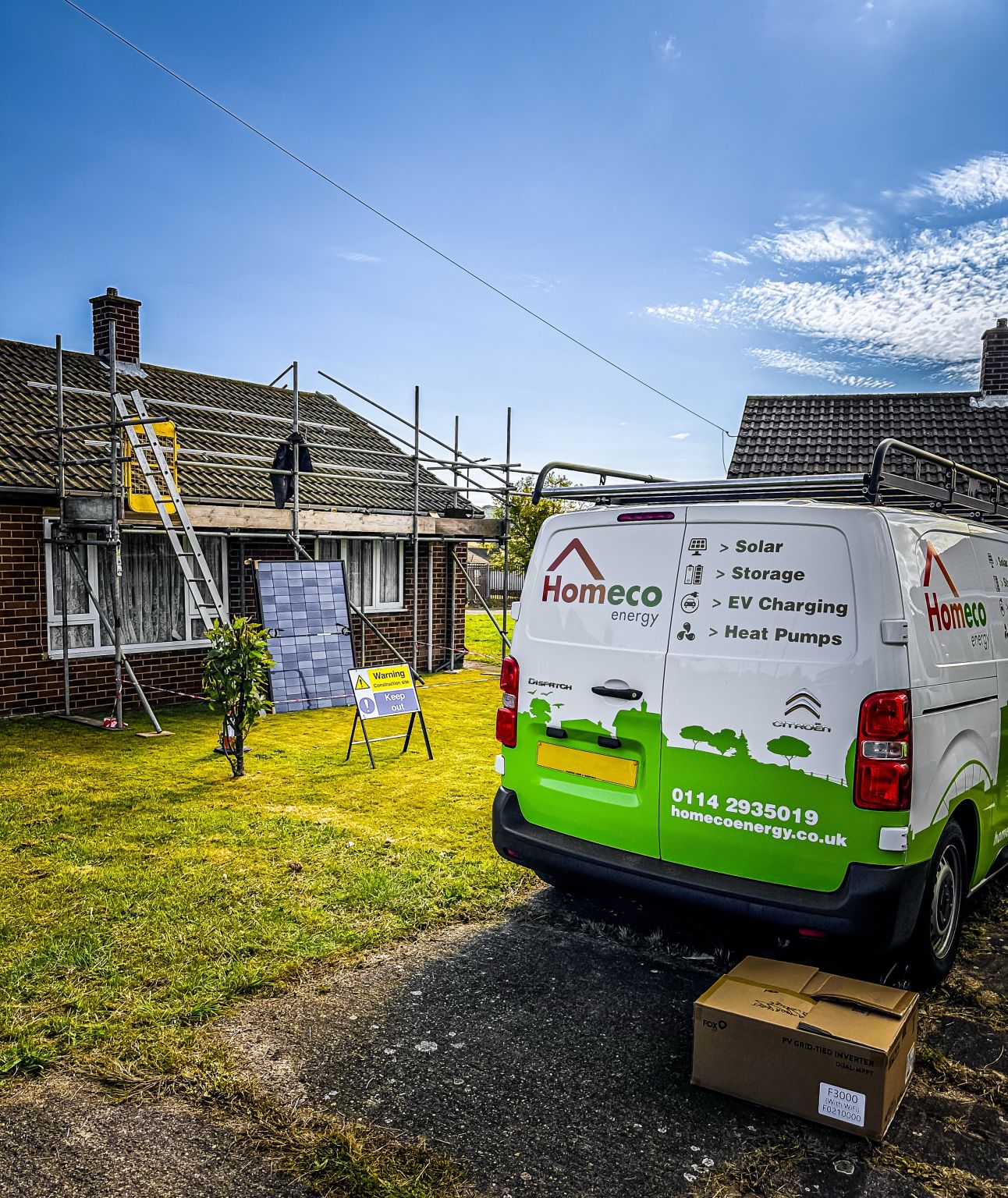
Energise Barnsley has installed solar on over 1,500 council homes across the Barnsley borough since 2015, working with Berneslai Homes to target households facing the highest fuel poverty alongside disabilities, health conditions or caring responsibilities. Tenant Liaison officers visit each home before work begins to explain the process and financial benefits, helping reach residents who might otherwise be hard to engage. All technology and installation costs are covered by the society itself, so residents receive free solar electricity from the moment panels are switched on, typically cutting bills by 25 to 35%, with some homes saving a further 30% through added battery storage. The project has also tackled a specific technical barrier: many 1950s-era homes share a single electricity cable with a neighbouring property, so Energise Barnsley is running a mass de-looping programme with the network operator, opening the door to future low-carbon technology even for homes not yet ready for solar. Surplus funds go back into a community fund supporting local clean-ups and energy-saving upgrades in care homes and leisure centres. Energise Barnsley also uses only local installers and maintenance engineers, keeping the travel impact of the works to a minimum, and the project’s growing base of self-generating homes reduces pressure on the wider grid, lessening the need for new pylons and substations in the area while making households more resilient during storm-related power cuts.
Nomination details
Why this matters
Any surplus monies in the society are used in the community fund, where local organisations can apply for grants. This has led to street cleans, community clean-ups, LED lighting in care homes and leisure centres (which reduces their reliance on high demand energy lighting). Energise Barnsley only uses local installers and maintenance engineers, ensuring the travel impact of the works are minimised too. Due to more homes having solar there is less need for the DSO to increase the number of pylons and substations in the area, and it is increasing households self-reliance for energy consumption if there are blackouts or power cuts, which are more frequent during storms in isolated countryside villages.
When Energise Barnsley began installing solar in 2015, very few people were aware of their energy consumption or how to reduce their bills, so they held free energy advice clinics in village halls to help residents understand their bills better and how to make the most of their solar installs. This has become less necessary as people’s understanding of energy has improved, and they worked with National Energy Action to create an advice leaflet, which is given to each home with a solar or battery install: https://www.nea.org.uk/get-help/leaflets/solar-p-v-advice/
Impact
The solar panels on each home generate enough energy to reduce household bills by 25-35%, which saves hundreds of pounds on each household’s electricity bill each year. Some homes also have batteries installed, alongside their solar, which allows them to save an additional 30% on their electricity bills, with the potential for more savings when resident tweak their behaviour (such as slow cooking while the solar is generating, or using their electric shower once the battery is charged).