We’ve mapped tranquillity – now let’s make sure we don’t lose it
23 October 2006
Countryside campaigners at the Campaign to Protect Rural England (CPRE) [1] today (Monday) unveil a revolutionary new way of measuring and mapping one of the most important things the countryside gives us all: tranquillity.
Now we’re challenging everyone to use our striking, colourful new map of England [2], along with the new measurement method, and act to retain this precious resource from further massive erosion. Tranquillity is one of the most sought after, hard to pin down ingredients of a good quality of life.
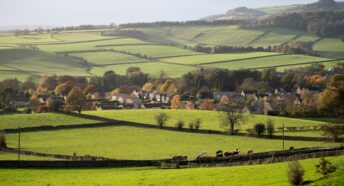
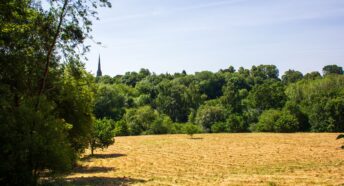
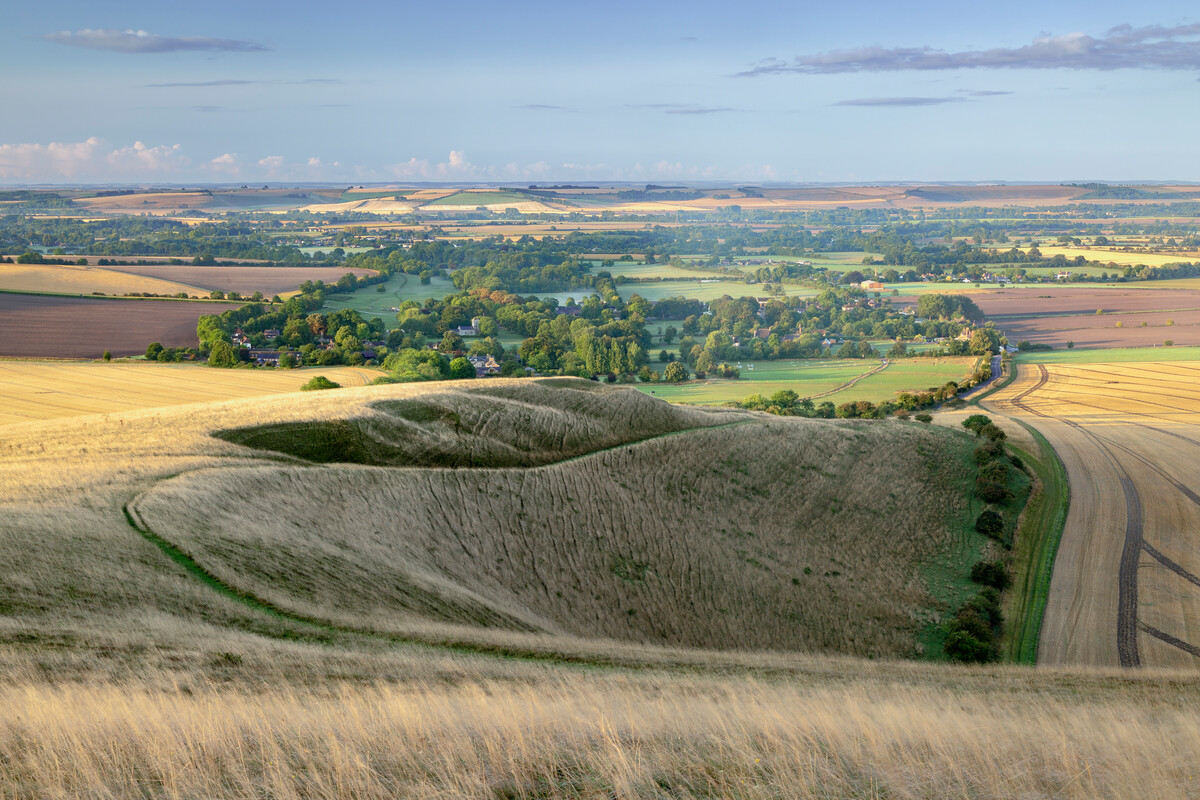
Our new map shows, in detail and across the whole of England, how likely the local surroundings are to make a visitor feel tranquil. The spectrum of colours ranges from deep red – within towns and cities and along major roads – shading through orange and yellow to a rich green in the most unspoilt areas of deep countryside with big views and little man-made noise.
Finding tranquillity in the countryside matters deeply to people: it contributes to mental and physical health and to quality of life.[3] A new opinion poll commissioned by CPRE shows what people most enjoy and appreciate about the countryside is ‘peace and quiet’.[4] And most people, wherever they live, say rural tranquillity is very important to them – and fear it is under threat.[5]
Where exactly is the most tranquil place in England? We know but we’re not telling. However, we’re running a competition on our website – inviting people to guess the spot. If the winner identifies the exact location, she or he will be sworn to secrecy.
Our new map reveals that England’s most tranquil region is the North East, and the most tranquil county is Northumberland followed by Cumbria and North Yorkshire. The least tranquil region is London and the South East [6] and the least tranquil county is Surrey, followed by Cheshire and Hertfordshire (third from bottom).
CPRE Chief Executive Shaun Spiers says: ‘Tranquillity is one of the greatest benefits we get from the countryside. But we know that tranquil areas are shrinking and fragmenting because of the remorseless growth in road traffic and flying and the gradual spread of towns, cities and infrastructure into the countryside.
‘Our new mapping method gives us a practical, reliable method of showing where tranquil places can still be found. This is the start of our campaign to persuade national and local government, planners, developers, business, and public bodies to start using it, in order to safeguard tranquil areas for the future and even enhance them.
‘And we want people to use our new maps to campaign for tranquillity in their local countryside.
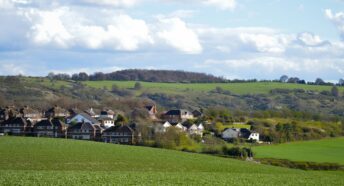
‘This isn’t just about protecting England’s few big remaining areas of deep tranquillity in the most remote areas, like Dartmoor, Northumbria and the North Pennines.[7] There are often important relatively tranquil places on our doorstep, such as in the Green Belts surrounding our big towns and cities.’
Although the Government has said it recognises the importance of rural tranquillity to the nation [8], it has done almost nothing to protect it.CPRE warns that unless it introduces policies to protect tranquillity, there will be further massive shrinkage and fragmentation of tranquil areas through:
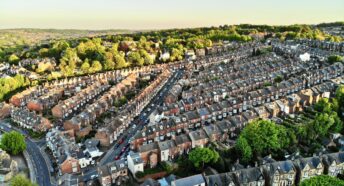
- New buildings and infrastructure – a greenfield area of 27 square miles, nearly the size of Leicester, vanishes under bricks, mortar, concrete and asphalt each year, in a country which is already among the world’s most heavily built up.[9]
- Growing traffic and expanding roads. Government forecasts traffic levels will increase by 31% between 2000 and 2015 if current trends continue.[10] Roads slice through tranquil places and their noise spreads far and wide.
- More flights, flight paths and runways. Take-offs and landings more than doubled over the past 20 years. The Government’s 2003 Aviation White Paper signalled a huge increase in air travel and airport development. Passenger numbers were forecast to almost treble over the next 30 years.[11]
- Increased light pollution and spreading sky glow – as fast-growing use of outdoor lighting blots out views of the stars.[12]
To make the new map, researchers from Northumbria and Newcastle Universities [13] first consulted more than 1,300 countryside users and visitors across England on their perceptions – what it was in their surroundings that did, and didn’t, make them feel tranquil. There was a wide diversity of views but most revolved around three themes – landscape qualities, the impact of man-made noises and the presence or absence of lots of people.[14]
The new measurement method takes into account factors contributing to feelings of tranquillity, such as sweeping views of open countryside, and factors detracting from those feelings – like busy roads and large man-made structures intruding into views.
Then, working from these responses, the team employed computer-based techniques and geographical databases to show how likely every part of England is to make a visitor feel tranquil. England’s land mass was divided into squares measuring 500 metres by 500 metres, each given a tranquillity score and colour-coded.
Helen Dunsford, Senior Lecturer in Geographical Information Systems at Northumbria University, said: ‘By talking to people directly, we’ve been able to identify, for the first time, characteristics of the rural landscape that contribute to, and detract from, someone’s feeling of tranquillity.
‘By using that data and Geographical Information Systems technology we have been able to produce a unique map detailing England’s most tranquil areas.’
Shaun Spiers concluded: ‘There’s no time to lose, because tranquillity is being threatened and diminished by a wide range of pressures. We want our pioneering new approach to be widely adopted and further developed. We can all benefit from a bit of peace and quiet and from getting closer to nature.’
CPRE’s new tranquillity campaign is supported by Esmée Fairbairn Foundation.
– END –
NOTES FOR EDITORS
1. CPRE, the Campaign to Protect Rural England, is a charity which promotes the beauty, tranquillity and diversity of rural England. We advocate positive solutions for the long-term future of the countryside. Founded in 1926, we have 60,000 supporters and a branch in every county. President: Sir Max Hastings. Patron: Her Majesty The Queen.
2. Copies of national and regional maps are available to the media. Please contact our press office 020 7981 2880.
3. See CPRE’s 12-page report Saving Tranquil Places (2.3MB PDF), published today, which summarises the benefits of tranquillity, the methodology behind the mapping and our policy recommendations. Printed copies available to the media free of charge from CPRE’s press office 020 7981 2880.
4. In a YouGov opinion poll commissioned by CPRE, tranquillity – and its various manifestations – was mentioned, unprompted, by 72% of 2,248 respondents as one of the things they most enjoyed or appreciated about the countryside. The words people mainly used were peace and quiet, relaxation, tranquil, calm, serene, wide open spaces, freedom, escape, solitude and getting away from towns, cities, crowds, concrete, buildings. 34% mentioned ‘fresh air’ as one of the things they most appreciated about the countryside, 20% mentioned the quality of scenery, views and landscape and 19% mentioned some aspect of nature, wildlife or flora and fauna. These can also be seen as aspects of the overall experience of feeling tranquil, as our research has shown.
5. In the same poll, carried out on 27-29 September 2006, 61% of people said rural tranquillity was very important to them and 34% said it was fairly important to them. 24% felt rural tranquillity was under a great deal of threat and 50% felt it was under a fair amount of threat. The poll also showed that large majorities among city dwellers and among people who rarely visited the countryside said rural tranquillity was important to them and felt it was threatened.
6. If London is excluded, the South East becomes slightly more tranquil that the West Midlands – which is then the least tranquil region. We feel London shouldn’t be excluded from the SE.
7. The largest remaining areas of deep, unfragmented tranquil countryside in England are mostly in National Parks – Dartmoor and Exmoor, the Yorkshire Dales, the North York Moors, the Lake District and Northumberland National Park. Two officially designated Areas of Outstanding Natural Beauty (AONBs) – the Forest of Bowland and the North Pennines – also harbour very large areas of deep tranquil countryside. All of England’s National Parks – including the New Forest in Hampshire and the new South Downs National Park – still contain substantial areas of highly tranquil countryside, as do all the AONBs. Our new map reveals that many areas of ‘ordinary’ countryside with no official designation remain rich in tranquillity, including some parts of the South East – the most built up and pressurised English region.
8. The Rural White Paper in 2000 recognised the ‘variety of things we value in the countryside’ and committed the Government to publish ‘a measure of change in countryside quality, including such issues as biodiversity, tranquillity, heritage and landscape character…’ (Our countryside: the future, paragraph 9.5.2). In 2004, DEFRA’s Rural Strategy recognised ‘The countryside provides many benefits. It is valued for its wildlife, landscape and cultural heritage and also tranquillity’ (page 34).
9. On average, 6,870 hectares – or nearly 27 square miles – of undeveloped land becomes developed each year, according to the Government’s Land Use Change Statistics – Table F1, Land Use Change in England to 2004: Additional Table LUCS-20A, DCLG, 2005. Leicester City Council’s area is 7,337 hectares. 11.2% of England’s land area is urbanised, with only the Netherlands and Belgium more built up in Western Europe; European Environment Agency.
10. From 1994 to 2004 road traffic in Great Britain, measured in vehicle kilometres, rose by 37% on motorways, 21% on rural A roads and 14% on minor rural roads, according to Department for Transport statistics. The total length of roads rose by 15% between 1980 and 2000. In 2004 the Department projected that road traffic would grow by 31% between 2000 and 2015.
11. The Future of Air Transport, DfT, 2003. The DfT’s mid range forecast was for numbers of UK passengers to rise from 229 million in 2005 to 401 million in 2020 with further growth thereafter.
12. A CPRE analysis of satellite data found that from 1993 to 2000 the proportion of England’s land area from which people could view a truly dark night sky fell from 15% to 11%.
13. The research team came from Northumbria University’s Centre for Environmental and Spatial Analysis and Participatory Evaluation and Appraisal in Newcastle-upon-Tyne and Newcastle University’s Landscape Research Group.
14. The top five components of ‘what tranquillity is’, according to countryside visitors and users, are: seeing a natural landscape, hearing birdsong, hearing peace and quiet, seeing natural looking woodland and seeing the stars at night. The top five components of ‘what tranquillity is not’ are hearing constant noise from traffic, seeing lots of people, seeing urban development, seeing light pollution overhead and hearing lots of people.