


Small wins, big challenges: our take on two years of Labour
Keir Starmer’s government was elected with a landslide on the promise of change and national renewal.
At that time, we said that there was encouraging ambition in the Labour manifesto: protecting the Green Belt, building affordable homes, and publishing a plan to help us make better decisions about land use. As we committed to working with the government to tackle the issues facing our countryside, we called on them to recognise the true value of the countryside.
A government creating division
In the months that followed, despite some very welcome ambition and investment in affordable homes, the government became increasingly hostile towards environmental protections, which it (wrongly) suggested was at odds with their plans for economic growth, housebuilding, and renewable energy. Beyond that, the government seemed to actively encourage a divisive rhetoric, getting close to large developers while openly dismissing environmental campaigners as ‘blockers’, taking aim at bats, newts and even snails. In fact, seven of the government’s planning-related press releases over the past two years have used divisive ‘builders versus blockers’ language.
But it wasn’t just what was said in press releases or soundbites. It was what was coming through loudly and clearly in government policy, legislation and plans.
Rural communities let down, nature threatened
Although we were pleased to see the return of strategic plans in local areas, the government’s Planning and Infrastructure Bill, now an Act, was a clear attempt to ramp up housebuilding at the expense of local planning democracy. No-where is that clearer than in the proposed ‘National Scheme of Delegation’, which comes into force later this year. This could be a significant threat to local democracy, as the National Scheme of Delegation puts more housing decisions into the hands of government planning officers and away from local planning committees.
The PIA introduced a seriously flawed ‘grey belt’ policy, which we said would risk release of Green Belt countryside. This is something we later proved to be true. Our research late last year found that most ‘grey belt’ applications by that point were on unspoilt Green Belt landscapes — a far cry away from the ‘wastelands’ and ‘disused petrol stations’ that the policy claimed to target.
We also joined the Wildlife and Countryside Link in highlighting the risks of Environmental Delivery Plans (EDP) which were a threat to our already depleted natural world. These would have given developers the opportunity to trash nature, only to ‘make up for it’ elsewhere. Though sustained pressure from CPRE and our partners did secure some safeguards, there’s much more to be done to ensure EDPs don’t give developers licence to destroy precious wildlife habitats and disrupt ecosystems.
Tax changes for farmers (now mostly reversed) haven’t helped, alongside the confusing and disjointed approach to Environmental Land Management Schemes (ELMs), which are supposed to help farmers regenerate the countryside.
A mixed picture on solar
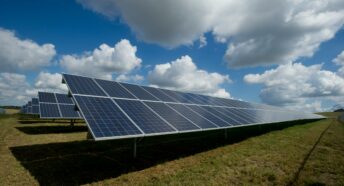
The government continued to ignore the widespread support for large-scale rooftop solar on warehouses and car parks, with our evidence laying bare the impacts of large-scale ground solar on our best quality farmland. Opposition to these schemes is substantial — especially in the hardest-hit rural areas — but is being roundly ignored.
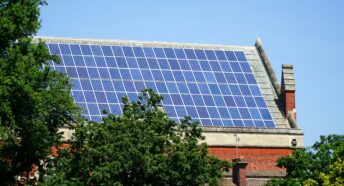
We were however pleased to see some movement on rooftop solar on domestic buildings, with new rules announced earlier in the year (the Future Homes Standard) requiring that rooftop solar be installed on most new homes.
Signs of a turnaround
Since the start of the year, there have been signs of progress. After many years of campaigning from CPRE, the Land Use Framework — a plan for how land can be used sustainably — was published. Given the mounting pressures on land, to support climate, energy, housing, food and nature recovery, such a plan has been urgently needed for many years. Although it lacked detail on delivery, we strongly welcomed the progress it represented, and it was Keir Starmer’s government that finally got it over the line.
Strategic authorities, created under the new Devolution and Community Empowerment Act, will have new powers over ‘rural affairs’, after sustained pressure from CPRE. Together with a return to spatial planning at more local scales, these too are welcome steps that help restore power in local communities — something we know Andy Burnham himself firmly believes in.
An opportunity for Andy Burnham
Given what we’ve seen from the Labour government over the past two years, it’s easy to see why people feel let down.
And it didn’t have to be this way. Labour now has the largest number of MPs in rural areas it ever has. This is something that Andy Burnham, Labour’s new prime minister, should take note of. He assumes office at a time when trust between the government and rural communities is in serious need of repair.
We’ve set out some key steps he can take to restore trust, and tackle our major land challenges, here.