


Greening the great grid upgrade

As part of our climate and energy campaigning, we’ve been advocating nationally for a countryside-friendly roll out of new sections of the national electricity grid, dubbed the ‘great grid upgrade’.
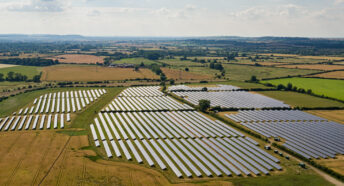
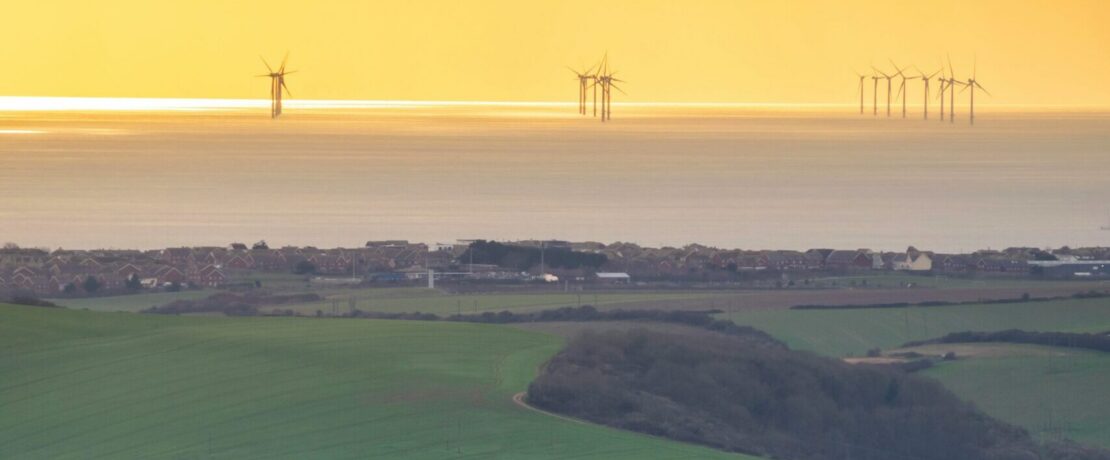
As we move away from fossil fuels and get ever more of our energy from renewables, mainly wind and solar, this means a significant shift in where power is generated in Britain. We need new connections to bring power from more remote rural locations and offshore to centres of demand (places where large amounts of electricity is consumed), in cities and industrial areas.
In other words, the country needs re-wiring. The challenge for CPRE is that we support this clean power transition, but want to ensure that it does not cause significant impacts on landscapes, nature and communities.
Greening the grid
Late last year we issued our Greening the Grid manifesto for how we should move energy around the country in a smarter way. In essence this means better strategic planning of where and how our energy is generated and consumed; involving the public and host communities earlier in the planning process, both nationally and in local project decisions; going the extra mile on mitigation (for example more use of undersea and underground cables) and creating meaningful and lasting local benefits for landscapes, nature and people.
Together with our sister organisations, CPRW in Wales and APRS in Scotland, we’ve been engaging with government, NESO (the National Energy System Operator) and National Grid (the company that builds and operates the grid in England and Wales) to help shape a grid that’s smarter and more countryside friendly. For the past six months we’ve been working hard to influence NESO, focusing on getting better integration of land use into their modelling, scoring successes on pathway options that give greater protection for scarce resources such high grade agricultural land and peatlands. In other words, we’ve been trying to highlight the importance of finite land — and how new grid infrastructure can be delivered with minimal harm to landscapes, nature and farmland.
However, the final choice of pathway will be made by the Secretary of State for Energy Security and Net Zero after a national consultation early in 2027. More campaigning will be needed later this year to ensure the government ensures best use of land lies at the heart of the new plan.
‘Beyond 2030’
Last week NESO also announced a new tranche of connections that will be rolled out in the 2030s, as more renewables, especially offshore wind, connects to the grid. These are in addition to many new pylon lines and undersea cables that are currently going through planning across East Anglia, Lincolnshire and the Midlands with a 2030 delivery date.
These current projects have angered many communities, especially in East Anglia, which is bearing the brunt of development. CPRE groups in Norfolk, Suffolk and Essex have been at the forefront of resistance, suggesting better alternatives. Sadly the current planning system is stacked against them. Grid infrastructure at this scale is classified as Nationally Significant — meaning decisions are not made by local authorities, but by the government-appointed Planning Inspectorate. Community objections are still heard, but the presumption is usually strongly in favour of approval, and meaningful changes to route and design are rarely made, despite community concerns.
The better news from this announcement is that the majority of the new connections will be offshore, including a huge new link from north east Scotland to land in Kent. But further new onshore pylon lines have been slated for sensitive landscapes, including the Lake District, the Welsh/English borders and mid-Wales.
A no-win choice for the Lake District
The proposals to link south west Scotland and Lancashire via the Lakes are especially worrying. Friends of the Lake District (who represent CPRE in Cumbria) are already alarmed — having fought off similar plans before. Their policy officer Dr Kate Willshaw warns that the coastal route would cross more than 50km of the Lake District National Park and World Heritage Site, negotiating numerous wetland Special Areas of Conservation — creating a no-win choice between landscape and biodiversity. A central Cumbrian route, while less damaging, would still directly impact 10km of the National Park, though it would run alongside existing lines with some potential for undergrounding mitigation over Shap Pass.
Community engagement critical for better design
Early engagement, good design and mitigation, and locally meaningful benefit packages are absolutely crucial if communities are to support new grid projects that underpin the clean power transition. Sadly, NESO and the government don’t seem to be getting our message. This week, NESO also released the final version of their Electricity Transmission Design Principles but have taken little heed of our advice to embed better social engagement principles into grid project planning and design. Although NESO now acknowledges the importance of meaningful community engagement, there is no direction to grid developers to do this before formal consultation begins. By then, it’s usually too late for any meaningful changes in the project design.
Despite the stubbornness of NESO and government to change direction, we will continue to champion communities who demand innovation in design and the provision of long-lasting sustainability benefits as the way to gain local social licence and support, such as Saxmundham Town Council’s ‘Empowering Nature’ proposals. Projects such as this are a small but vital step in moving to a new norm where development is not ‘done to’ a community but truly done ‘with them’. Only then can government say they are taking communities with them on the net zero journey.