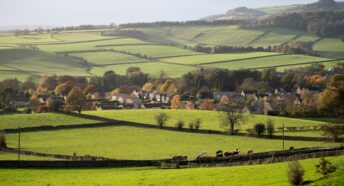
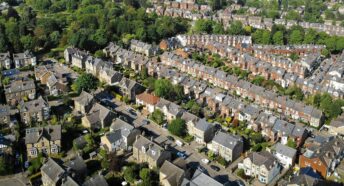
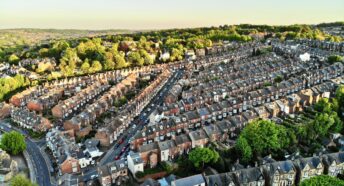
The area of brownfield land is growing faster than it is being used. Yet Government proposals risk neglecting large areas in our towns and cities which need regeneration and place the countryside at risk.
A new report published by the Campaign to Protect Rural England (CPRE) [1], Building in a Small Island, challenges claims that there is a shortage of brownfield land suitable for housing development [2].
The findings bring into question the Government’s proposed national planning policies that would no longer require developers to use previously developed land for any new development before greenfield sites are considered.
The research commissioned by CPRE found that - far from running out - the supply of brownfield land is dynamic and increasing. For every five suitable housing plots becoming available in England between 2001 and 2009, only three homes where built [3]. Even in the South East where housing demand is highest, land supply outpaced demand with one quarter (26 per cent) of suitable brownfield plots going unused.
Neil Sinden, Director of Policy and Campaigns for CPRE, says: “The idea that we’re running out of brownfield land is a myth. Developing new housing on appropriate brownfield land first is the most environmentally, socially and economically sustainable option. It should be a central strand of the Government’s final National Planning Policy Framework. Land is a finite resource, particularly on this small, crowded island of ours, and we should recycle it whenever possible.”
The brownfield first approach was first introduced in 1995. The CPRE study found that over 143 square miles of brownfield land have been developed for housing since 1995 - safeguarding large areas of Green Belt and other countryside across England. If this development had taken place on greenfield land, an area seven times the size of Southampton, or over 52,647 football pitches, would have been lost to new development.
Neil Sinden continued: “It can't be right to dig up fields and hedgerows for housing when we have chain link fences around derelict sites blighting large areas in our towns and cities. We stand at a critical moment in the history of England’s built environment. CPRE recognises there is a need for more housing but making it easier for developers to build on more profitable greenfield sites while suitable brownfield sites require regeneration will not lead to sustainable economic growth.”
Focusing new housing development on brownfield sites in urban areas has had critical economic and social benefits. Ministers have argued that their proposed policy would be less environmentally damaging as it would safeguard some land currently classed as ‘brownfield’ but with high value for wildlife. Wildlife groups have responded jointly with CPRE to state that the solution to this issue is a tighter definition of brownfield, not the removal of a brownfield first approach [4].
Neil Sinden concluded: “Our research shows that there is plenty of brownfield land available and national planning policy should promote its use as part of a sustainable approach to development. We should continue to regenerate our urban areas, particularly by encouraging the provision of much needed affordable housing.”
Quotes in Support of the brownfield first approach:
CPRE has found widespread support for the brownfield first approach including:
- John Gummer, Former Secretary of State for the Environment;
- Liz Peace, Chief Executive of the British Property Federation;
- Lord Rogers of Riverside, Rogers Stirk Harbour and Partners, Chair of the Urban Task Force;
- Tom Bloxham MBE, Group Chairman and Founder, Urban Splash;
- Chris Brown, Chief Executive - Igloo Regeneration;
- Tony Burton, Director – Civic Voice and
- Martin Crookston, Strategic Planning Consultancy
- Alastair McCapra, Chief Executive, Landscape Institute
- Adrian Wilkes, Chair, the Environmental Industries Commission
Full quotes in support can be downloaded here: http://bit.ly/sYYfwG
Key findings from the report:
- In England there is sufficient brownfield land available and suitable for residential development for 1,494,070 new dwellings. This is equivalent to around 6 years’ supply at the building rates the government claims we need and 10 year supply at 2009 building rates. (2009 figures)
- There is land available for 452,110 new dwellings in the southern regions (London, South East, and the South West).
- The proposed changes to national planning policy could lead, under scenarios projected by the Government, to the amount of greenfield land being used for housing more than doubling (a 158 per cent increase).
- The highest levels of brownfield re-use for new housing in recent years was in 2007, when overall housing output was also at its highest.
- More previously developed land was available and suitable for housing in 2009 than in 2001.
Regional information:
- In England three homes were built for every five suitable plots available. (62 per cent or 942,410 new homes)
- In the South West almost all suitable plots that became available for housing were used. (98 per cent or 91,820 new homes)
- In the South East three homes were built for every four suitable plots available. (74 per cent or 169,109 new homes)
- In London only one in three plots suitable for housing were re-developed. (35 per cent or 166,178 new homes)
- In the East of England, nine homes were built for every 10 suitable plots. (87 per cent or 109,264 new homes)
- In the West Midlands, nine homes were built for every 10 suitable plots. (87 per cent or 90,169 new homes)
- In the East Midlands, four out of five suitable housing plots were re-developed. (80 per cent or 77,207 new homes)
- In Yorkshire and the Humber, well over four in five suitable housing plots were re-developed. (83 per cent or 85,896 new homes)
- In the North West, just under half of suitable housing plots were re-developed. (48 per cent or 119,074 new homes)
- In the North East, two out of three suitable housing plots were re-developed. (68 per cent or 36,120 new homes)
End
Notes to Editors
[1] Campaign to Protect Rural England, ‘Building in a small island: Why we still need Brownfields First’, November 2011
[2] Department of Communities and Local Government, NPPF Impact assessment, July 2011, page 49, paragraph 2
[3] See 1, page 25 Table 7
[4] For full details see Wildlife & Countryside Link’s response to the draft NPPF, available from www.wcl.org.uk/docs/Link_response_to_NPPF_consultation_171011.pdf