Home > News > There's no such thing as a free hedgerow

There's no such thing as a free hedgerow

10 July 2006

Farmers make a huge, hidden contribution to conserving England's beautiful countryside, a new report reveals today (Monday). It estimates they carry out in excess of £400 million worth of landscape work a year beyond what they do within the framework of agri-environment schemes. {1}

Any changes in funding for agriculture must take account of these unrecognised costs.

The National Farmers' Union {2} and countryside campaigners CPRE {3} have together produced a report which provides the first estimate of the cost of the work that England's farmers and agricultural workers do in conserving and managing the country's much loved and hugely valuable rural scenery.

The findings, set out in their Living Landscapes {4} report available today, aims to kick-start a debate about long-term support for farmers which recognises their leading role in looking after a diverse, beautiful and uplifting countryside for the benefit of us all.


CPRE and the NFU are today (Monday) publishing their report Living landscapes: hidden costs of managing the countryside, available from CPRE's press office by email. The report contains case studies of the conservation work individual farmers do. Their contact details are at the end of this news release, with a summary of the report's findings.

Our survey measured landscape conservation work not covered by agri-environment schemes. It worked out at £2,410 per year for the average English farm. {5}

NFU President Peter Kendall said: 'We need policy-makers and policy-influencers to understand that there is much, much more to being a farmer than being a least-cost producer of food.

'If economics was everything, many of the things people loved about the countryside would be under threat in the name of efficient production. The fact that they remain is because farmers instinctively understand the wider cultural and environmental significance of what goes to make up our landscapes.'

CPRE Chief Executive Shaun Spiers said: 'Amid all the talk of globalisation and increased competitiveness in agriculture, our farmers will need to be supported to look after our beautiful countryside. Great landscapes matter to us all - they contribute to our wellbeing, our personal and environmental health and our economy in all sorts of ways, including tourism.'

The research was based on a survey of farmers asking how many hours in an average year it took them to work on a list of features that contribute to the character of the landscape. An estimate of the cost of this time, based on contractor's rates, was then calculated.

This survey was then followed up by interviewing in depth 27 of the farmers who had responded to the survey. The interviews examined and confirmed the findings, and also revealed that if farm support payments were abolished farming and conservation work would decline drastically - with devastating effects for the countryside. Land would either be abandoned or farmed ever more intensively.

A recent report by the Treasury and Defra {6} foresaw the ending of farm support payments - causing both the NFU and CPRE serious concern. Equally worrying, cuts to the EU's rural development funds means that funding for agri-environment schemes could be reduced in the future - when instead they should be growing, given rising concerns about the environment and growing appreciation of the countryside. {7}

CPRE and the NFU are calling for:

  • Government to match the money transferred from the Single Payment to agri-environment schemes throughout the period 2007 to 2013.
  • A Government commitment to more research and analysis of the likely impacts of further CAP reform on farmers' ability to continue looking after landscapes.
  • A Government commitment to significantly increase support for landscape management in the long term.

Shaun Spiers concluded: 'The Government must realise that there's no such thing as a free hedgerow when it comes to farmers looking after the wider countryside. We need to make sure they can continue this crucial role, because if they don't who will?'

- END -

NOTES FOR EDITORS

1. The finding is based on a survey carried out in 2005, before the Single Payment Scheme (SPS) for farm support and the Entry Level Environmental Stewardship scheme (an agri-environment scheme) were introduced. In return for receiving payments under the SPS farmers must now comply with a number of requirements, including soil protection and basic maintenance requirements for a range of landscape features. This is known as cross compliance. Our joint research showed farmers are going well beyond this in looking after the countryside. A key aim of our survey was to acquire baseline data on landscape management before the new Entry Level Environmental Stewardship and SPS cross compliance requirements began to make an impact on farmers' land management activities. Further research into the cost of managing landscape features is needed to assess the extent to which further changes to farm support payments would affect the headline figure derived from the survey.

2. The NFU is a trade association which promotes farming excellence and supports its members in profitable and sustainable businesses. It represents farmers and growers politically and publicly and provides valued services to members.

3. CPRE, the Campaign to Protect Rural England, is a charity which promotes the beauty, tranquillity and diversity of rural England. We advocate positive solutions for the long-term future of the countryside. Founded in 1926, we have 60,000 supporters and a branch in every county. President: Sir Max Hastings. Patron: Her Majesty The Queen.

4. Copies of Living landscapes: hidden costs of managing the countryside will be available to the general public on both the NFU and CPRE websites: www.nfuonline.com.

5. The analysis of the survey data was undertaken by the Centre for Agricultural Strategy at the University of Reading. The face-to-face interviews with farmers were conducted by P. Baker Consultancy in association with the University of Plymouth.

6. In December 2005 HM Treasury and the Department for Environment Food and Rural Affairs published a document 'A Vision for the Common Agricultural Policy'. It foresees that in 10 - 15 years time European agriculture should be 'internationally competitive without reliance on subsidy or protection' (paragraph 1.5).

7. In December 2005 the UK held the Presidency of the EU and oversaw the negotiations to agree a budget for the European Union from 2007 to 2013. The UK supported a cut to the part of the EU's budget that pays for rural development programmes in member states. These programmes include agri-environment schemes. Estimates by the NFU suggest that from 2007 -13 the UK will be getting just £450m for rural development spending compared to the £748 million it received for 2000-06. Although farmers will be expected to make up the shortfall by transferring some of their Single Payment funding to rural development expenditure there is a risk that the new Environmental Stewardship Scheme and the expansion of the Higher Level scheme in particular will be restricted.

CASE STUDIES:

Mr Tom and Isabelle Ostle, Wellington, Cumbria
Tom Ostle estimates that he spends 10 per cent of his time maintaining the West Cumbrian countryside he is immensely proud of. Special areas of their 200-plus acre farm have been designated 'conservation areas', and each year another such project is started. However, the work is far from easy, as the couple struggle to find the skilled workers required to undertake work such as hedge laying. They have also been criticised in the past by locals for their attempts to improve the natural beauty of the area.

Tom Meikle, Cropthorne, Worcestershire
Tom Meikle has for many years recognised the importance of an environmentally sensitive approach to farming, and his work was recently rewarded when he won the NFU's Farming for Wildlife Award in 2004. He manages 70 acres at his own farm and a further 250 acres in partnership with his parents - growing sugar beet, salad onions, dwarf beans, barley and wheat. His work has encouraged a wide range of birds and he plans to restore an old pond, demonstrating his continuing commitment to encouraging new wildlife habitats.

David Cotton, West Bradley, Somerset
David Cotton's passion for trees has encouraged an explosion in birdlife at his Somerset farm - and a number of roe deer use his well maintained hedgerows as shelter. David has planted a wood under the woodland premium scheme and would do even more such work if he could justify it financially. He believes that the amount of time he spends working to improve the environment is far greater than any current funding could compensate him for. His farm is home to a designated county wildlife site due to the presence of great crested newts in a pond.

John Ellerington, Skipton, York
Keen wildlife photographer John Ellerington has learned how to encourage a number of bird species to return to his 800 acre farm. Leaving large boundary strips and bald patches in his fields has heralded the return of birds widely believed to have been lost to the area, and now regular visitors include curlew, oyster catchers and skylarks. An extensive maintenance programme for the hedgerows on John's farm has seen 1,700 metres of new hedge planted, encouraging between 2,000 and 3,000 new plants.

Steve Bumstead, Great Barford, Bedfordshire
Every decision on Steve Bumstead's 340 acre farm is made with the impact on the environment in mind. He is pleased farmers are now getting the financial reward for the stewardship work he has always seen as central to his work. At his arable farm Steve leaves over-wintered stubble as cover and food for birds. Steve's proximity to the local river network has lead to the creation of an otter halt, to help otters move from the River Ivel to the Great Ouse.

Nigel Oakey, Godington, Bicester
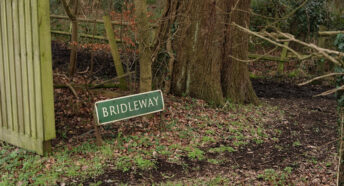
Nigel Oakey spends more than 20 hours of his working week on countryside management and enjoys showing the public the fruits of his labour. He manages the bridleways and walkways that criss-cross his land without financial assistance and has even developed a pond which has become a popular local spot for picnics. He has received welcome assistance under the Countryside Stewardship Scheme (CSS) and is happy to show people the natural beauty of the land.

EXECUTIVE SUMMARY OF LIVING LANDSCAPES

Most of England's countryside is looked after by farmers, and has been for hundreds of years.

Our landscape is a huge part of England's heritage. Farming plays a crucial role in shaping the landscape, but there is a lack of accurate information on the extent and nature of landscape management activities undertaken by farmers, especially when undertaken outside the framework of agri-environment schemes.

The Campaign to Protect Rural England (CPRE) and the National Farmers' Union (NFU) have joined together to make a first estimate of the extent of this 'uncompensated work,' that not undertaken through agri-environment schemes, and to consider what might happen to it if farm finances were put under further pressure. We both want to see a sustainable future for England's beautiful and diverse countryside. CPRE and the NFU believe farmers have the leading role to play in securing that future.

The report contains a two part study of English farmers. The first part, a survey, examined what landscape maintenance work farmers undertook. The second part of the research consisted of a series of face to face interviews, asking for survey participants' reactions to the findings, and how their landscape management activities might be affected if farming support was further reduced.

The statistical analysis of the survey results was carried out by the Centre of Agricultural Strategy at the University of Reading, in liaison with the NFU and CPRE. The questionnaire was sent to 2,084 farmers across England. The interviews were conducted by P Baker Consultancy in association with the University of Plymouth. Twenty seven face-to-face interviews were undertaken with farmers who had participated in the survey to explore its findings.

The report features case studies of individual farmers, some of which are drawn from the research.

We estimate that the landscape maintenance work carried out on the average English farm, not supported by agri-environment funding, amounted to £2,410 per year. This is based on what it would cost to hire contractors to carry out the work. The contractor rates were those obtained from the surveys. Our survey revealed some of the maintenance work, such as hedge trimming, is already being carried out extensively by contractors.

On this basis, the total cost to farmers of landscape management outside agri-environment schemes across England can be estimated at £412m per year.

We believe this figure is a conservative estimate. It does not fully consider the loss of income associated with any reduced production. Neither does our calculation consider the extent to which current agri-environment schemes fully compensate the management activities that they require the farmers to undertake, nor does it account for the benefits derived from these activities. Finally, this report does not analyse the wider benefits derived from landscape management activities, such as natural resource management and attracting visitor expenditure.

What would happen if agri-environment payments were reduced? And what would happen if the Single Payment Scheme available to all farmers were to be removed? Our research indicates, not surprisingly, that the work of landscape maintenance would suffer dramatically under each of these scenarios.

Farmers would lack the time, money and manpower to do the work on their land or to hire contractors to do it for them. They would either cut back on the work or cease it completely.

For landscape features to be maintained, either farm incomes must be maintained or management work needs to be funded in a way that reflects its true cost and value. If they are not, two things could happen. Some land might be abandoned, become overgrown and lose its distinctive character. The remainder could be exploited ever more intensively for maximum output at minimum cost, or be developed.

Both outcomes will swiftly erode the quality of England's beautiful, diverse and highly valued farmed countryside. That could lead to a vicious spiral, with the public valuing England's countryside and farmers less - and financial support for farmers falling further.

This should not be allowed to happen. CPRE and the NFU argue that there is a need for much more public awareness about the work farmers do in looking after the countryside we all value. We need much more analysis and debate about how this work should be reward following the introduction of a decoupled farm payments system. We hope this report will contribute to increasing public awareness and to the debate out how our landscapes should be managed in the future.

Note on compensated and uncompensated work: Work undertaken within agri-environment schemes is, for the purposes of this report, compensated work. Work undertaken outside agri-environment schemes is referred to as uncompensated.

Contact details
  • Press Office
  • Tel: 020 7981 2800
Campaigns