Eco-Towns: Government should go back to the drawing board
30 June 2008
As the consultation [1] on eco-towns draws to a close countryside campaigners, CPRE [2], are calling on the Government to focus on one or two truly exemplary schemes, scrap sub-standard proposals and rethink its eco-town programme.
Marina Pacheco, CPRE’s Head of Planning, said:
‘To begin with, CPRE supported the eco-towns initiative. Who would object to exemplar schemes built to high environmental standards which provide the affordable homes the nation desperately needs?
‘But we now believe we have been led astray. What will this programme deliver? It appears increasingly to be about spin with very little substance. The creation of the eco-town Challenge Panel [3] looks increasingly like a supreme example of spin-mongering.’
CPRE key concerns about shortlisted eco-towns proposals are as follows:
• due to their location most eco-towns shortlisted are unlikely to work in transport terms and risk being car dependent housing estates with residents stranded in the face of continued fuel price rises;
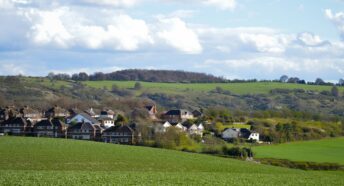
• most of the sites are predominantly greenfield and include farmland of the highest agricultural quality; two sites actually lie in the Green Belt [4];
• three eco-towns are proposed for the East of England where water supply and sewerage have already reached maximum capacity;
• most of the proposed eco-towns go against local plans agreed with communities and therefore have no local democratic mandate;
• site-selection is based on arbitrary, mainly developer-led, bids rather than sound planning in the wider public interest;
• communities are being asked their views on schemes about which little firm information is available, apart from the location;
• there is a worrying lack of evidence to demonstrate that schemes will offer truly sustainable models of living and working;
• the Government’s insistence that eco-towns should be freestanding makes no sense since most new housing will be in and around towns where infrastructure needs can be more easily met.
Marina Pacheco concluded:
‘We are urging the Government to go back to the drawing board. Many of these shortlisted schemes are recycled, failed proposals [5]. The Government insists that eco-towns must be freestanding new settlements. But by refusing to look at alternatives, such as eco-quarters and redevelopment sites already coming through the planning pipeline it is missing a golden opportunity.’
– END –
NOTES FOR EDITORS
1. Consultation on Living a Greener Future, Communities and Local Government, closes 30 June. There will be further consultation over the summer when the Government is expected to publish a Planning Policy Statement on eco-towns along with sustainability appraisals of shortlisted schemes. The final shortlist is expected in the autumn.
2. CPRE, the Campaign to Protect Rural England, is a charity which promotes the beauty, tranquillity and diversity of rural England. We advocate positive solutions for the long-term future of the countryside. Founded in 1926, we have 60,000 supporters and a branch in every county. President: Bill Bryson. Patron: Her Majesty The Queen. www.cpre.org.uk
3. The eco-town Challenge Panel was established by Ministers in April 2008. It has met on two occasions since then and published its advice to developers on Monday 23 June 2008. See
http://www.communities.gov.uk/news/corporate/860195
4. Rossington and Weston-on-Green. Baroness Andrews told the House of Lords on 2 June that ‘We will not build on the Green Belt.’
5. Locations where proposals have been put forward in the past include Curburough, Bordon, Rossington, Ford airfield, Marston Vale and Hanley Grange.