


Discover the countryside: local favourites from across England
Where do you go when you want to discover somewhere a little different? What do local people notice that the rest of us might walk straight past?
For the final week of Love Your Countryside, we asked CPRE groups across England to share some of what makes the countryside in their area special – from favourite walks and lesser-known places to unusual landscape features, local history and seasonal sights.
They know their local countryside better than almost anyone, and their suggestions take us beyond some of the best-known destinations to reveal the stories, details and places that make each landscape distinctive.
Choose a region and see what you might discover
North East & Cumbria
Northumberland
Northumberland’s countryside is defined by contrast: rugged moorland beside soft pasture, volcanic crags rising from rolling hills, and wide, open spaces shaped by centuries of wind, water and human stewardship.
Cumbria
Cumbria is home to one of Britain’s rarest habitats: temperate rainforest, a woodland type now confined to a handful of pockets along the country’s wetter, western edge; from Cornwall to Cumbria and the west coast of Scotland.
North West
Cheshire
Cheshire’s countryside includes the Sandstone Ridge and lowland peatlands, alongside the county’s more familiar farmland and plains.
Lancashire, Greater Manchester & Liverpool
This is countryside where nature, industry and history often sit side by side. Old chimneys, mills and mines are now habitats for wildlife including owls, peregrine falcons, bats and foxes, while the Forest of Bowland brings fells, heather moorland, upland hay meadows and some wonderfully dark night skies.
Yorkshire & the Humber
North & East Yorkshire
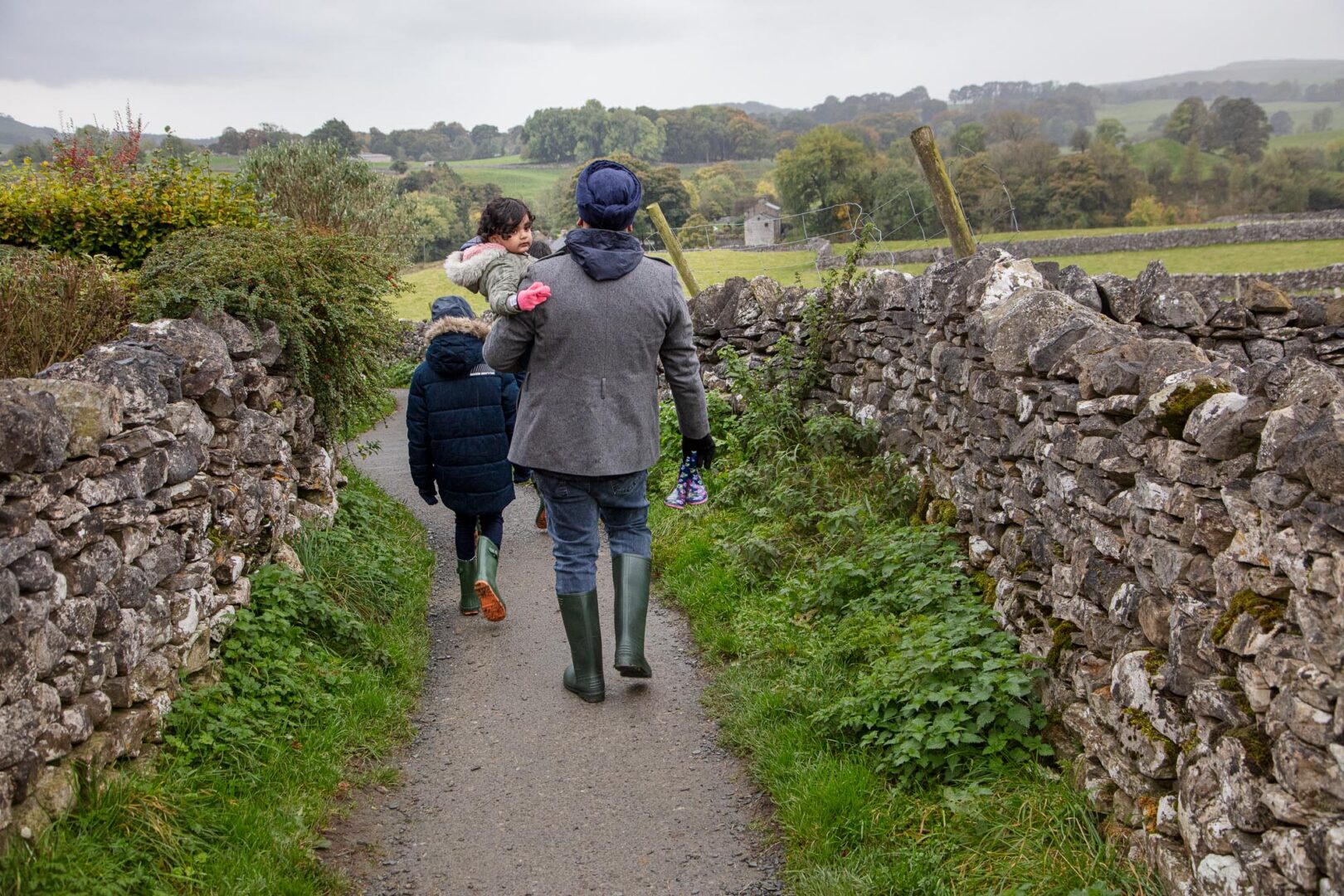
From sweeping heather moorland and peat bogs in the North York Moors to the glaciated valleys and drystone walls of the Yorkshire Dales, North and East Yorkshire contains some extraordinary contrasts.
Head east and the landscape changes again, to the rolling chalk farmland and hidden dry valleys of the Yorkshire Wolds, before meeting dramatic chalk and sandstone sea cliffs.
South Yorkshire / Peak District
The northern and eastern edges of the Peak District, England’s first National Park, lie within South Yorkshire, right on the edge of Sheffield.
East Midlands
Derbyshire and Nottinghamshire
Beyond the Peak District, Derbyshire’s countryside takes in the wooded Derwent Valley, the farmland of the Trent and Dove valleys and the young woodlands of the National Forest, with historic mill villages and far-reaching views around places such as Crich and Calke Abbey. Nottinghamshire’s countryside ranges from the ancient oaks and heathland of Sherwood Forest to the wide floodplain of the River Trent, with estate parkland, rolling farmland and far-reaching views around places such as Clumber Park and Southwell.
Leicestershire
Leicestershire’s countryside includes a National Nature Reserve holding some of the earliest known evidence of complex life on Earth, alongside royal history and the childhood haunts of a national broadcasting icon.
Rutland and Lincolnshire
Rutland and Lincolnshire sit side by side but could hardly look more different. Rutland is England’s smallest historic county, a compact pocket of honey-stone villages and gently rolling vales. Lincolnshire is far larger and more varied, running from the chalk ridges of the Wolds down to the flat, sea-level fens.
West Midlands
Herefordshire
Herefordshire’s countryside was shaped, in part, by how it came to be seen. William Gilpin’s ‘Wye Tour’ of 1770, and the guidebook that followed, helped invent the very idea of travelling to admire landscape, and the Wye Valley has drawn visitors ever since.
Andrew McRobb, Director and Trustee for CPRE Herefordshire, recommends the story behind it.
Gilpin developed a set of rules for defining ‘the Picturesque’, a way of appreciating landscape that had a lasting effect on how Britain sees its countryside, later shaping the designation of protected landscapes including the Wye Valley itself. His best-selling guidebook, Observations on the River Wye, became the essential companion for visitors, soon running to a fifth edition, helping travellers follow set itineraries to particular views, ruins and dining spots; making the Wye Tour one of the first package holidays.
The Tour’s popularity endured for decades and was renewed in the 1870s when the Wye Valley Railway opened. By the 1880s, thousands were arriving at Tintern station to walk to the Abbey and watch the harvest moon rise through its Rose Window. Tourism along the Wye is now worth £100m a year to the area.
Shropshire
In Shropshire, every hill belongs to a different chapter of the Earth’s story. Cross the county and you cross hundreds of millions of years: ancient volcanic rock older than life on land, seabeds turned to ridges, and deserts that once stretched where villages now stand.
Shropshire’s geology is among the most varied of any county in Britain, rocks from ten of the twelve recognised geological periods found within its borders. Almost every Shropshire village once had its own quarry, and the county’s buildings still “grow” from the rock and clay beneath them, according to Sally Green, CPRE Shropshire’s geology lead. A walk through any village is, in that sense, a walk through its geology too.
Sally shares this story through a talks and walks run by CPRE Shropshire, tracing the county’s rock from ancient volcanic outcrops to Ice Age valleys.
East of England
Bedfordshire
Bedfordshire’s countryside includes chalk streams and the rolling Chiltern Hills, with chalk springs, wildlife and far-reaching views around places such as Barton Hills.
But some of the most interesting stories can be found in the paths running through the landscape.
Essex
Essex’s countryside is a gently rolling clay plateau, cut through by slow rivers and bordered by a low-lying coast of saltmarsh and mudflats. Threaded through the farmland are pockets of much older ground: ancient woodland that has survived, in places, since before the Romans arrived.
Suffolk
From the shingle beaches, heathland and estuaries of the Suffolk coast to the Brecks and Fenlands in the west, Suffolk’s countryside has many different characters.
Its history is written into the landscape too, in the Anglo-Saxon burial mounds of Sutton Hoo, Constable’s much-painted countryside around Flatford and the wild coast of Orford Ness, with its remnants of a secret military past.
But there’s plenty to discover in the everyday countryside too. Its farmland, villages and lanes hold centuries of history in places you might easily pass by.
Hertfordshire
Just over half of Hertfordshire is designated Green Belt; its chalk streams, ancient woodland and villages sitting close to London’s edge.
Norfolk
Norfolk’s countryside stretches from its famous big skies and coastline to a network of quieter fens, broads and grazing marshes further inland, much of it reachable by branch railway line without needing a car.
London
London contains more countryside than people often expect. Green belt, ancient woodland and internationally important wetlands all sit within, or on the edge of, the capital.
South East
Hampshire
Hampshire packs an extraordinary variety of countryside into one county.
It is one of only four English counties to contain two National Parks within its boundaries: the South Downs in the east and the New Forest in the south-west.
Add the North Wessex Downs, Cranborne Chase and Chichester Harbour National Landscapes, and around 38% of Hampshire is nationally protected for the quality of its countryside.
Its landscapes range from chalk grassland and chalk rivers to internationally important lowland heath.
Kent
Kent is a county rich in a mosaic of different habitats and beautiful hidden gems. From ancient woodlands, rolling chalk grasslands, National Landscapes and working farmland to peaceful river valleys and award-winning beaches.
Oxfordshire
Oxfordshire’s countryside has been shaped by water.
Six major rivers – including the Thames, Cherwell and Windrush – connect a rich network of habitats, from the Thames Valley and Cotswold limestone hills to the chalk landscapes of the Chilterns and the ancient Ridgeway.
Ancient woodland, species-rich meadows, floodplain grasslands, rare chalk streams and productive farmland support wildlife including otters, water voles and kingfishers. Oxfordshire was also at the heart of England’s red kite reintroduction programme, making these magnificent birds a defining sight in the county today.
South West
Avon and Bristol
Avon and Bristol’s countryside includes ancient gorges, wooded estates and farmland, much of it within easy reach of the city.
Cornwall
Cornwall’s countryside is famous for its coastline; but inland moors, quoits and wooded river valleys carry their own stories and legends.
Dorset
Dorset’s countryside stretches from its famous Jurassic Coast inland to a network of parishes connected by footpaths and bridleways.
Gloucestershire
Gloucestershire divides into three distinct landscapes: the limestone hills and honey-stone villages of the Cotswolds in the east, the ancient woodland and river gorges of the Forest of Dean and Wye Valley in the west, and the low-lying Severn Vale in between.
Devon
With two National Parks, two coastlines and five National Landscapes, Devon contains an extraordinary variety of countryside.
Dartmoor and Exmoor sit alongside the North Devon Coast, South Devon, Blackdown Hills, East Devon and Tamar Valley National Landscapes, with rivers, valleys, hills and rich pasture in between.
Somerset
As Becky Collier from CPRE Somerset puts it, Somerset’s landscape “has it all”. Stretching from Exmoor in the west to Frome in the east, the county encompasses lowland marshes, coastal cliffs, limestone gorges and caves, sandy beaches, wild moors, wooded hillsides, chalk grasslands and patchwork fields.
It includes four National Landscapes, part of Exmoor National Park – also an International Dark Sky Reserve – and two vast ‘super’ National Nature Reserves.
Its superlatives aren’t bad either: Britain’s biggest gorge at Cheddar, Western Europe’s largest managed wetlands on the Somerset Levels and England’s tallest tree at Dunster, alongside the enormous tidal range of the Severn Estuary.
Wiltshire
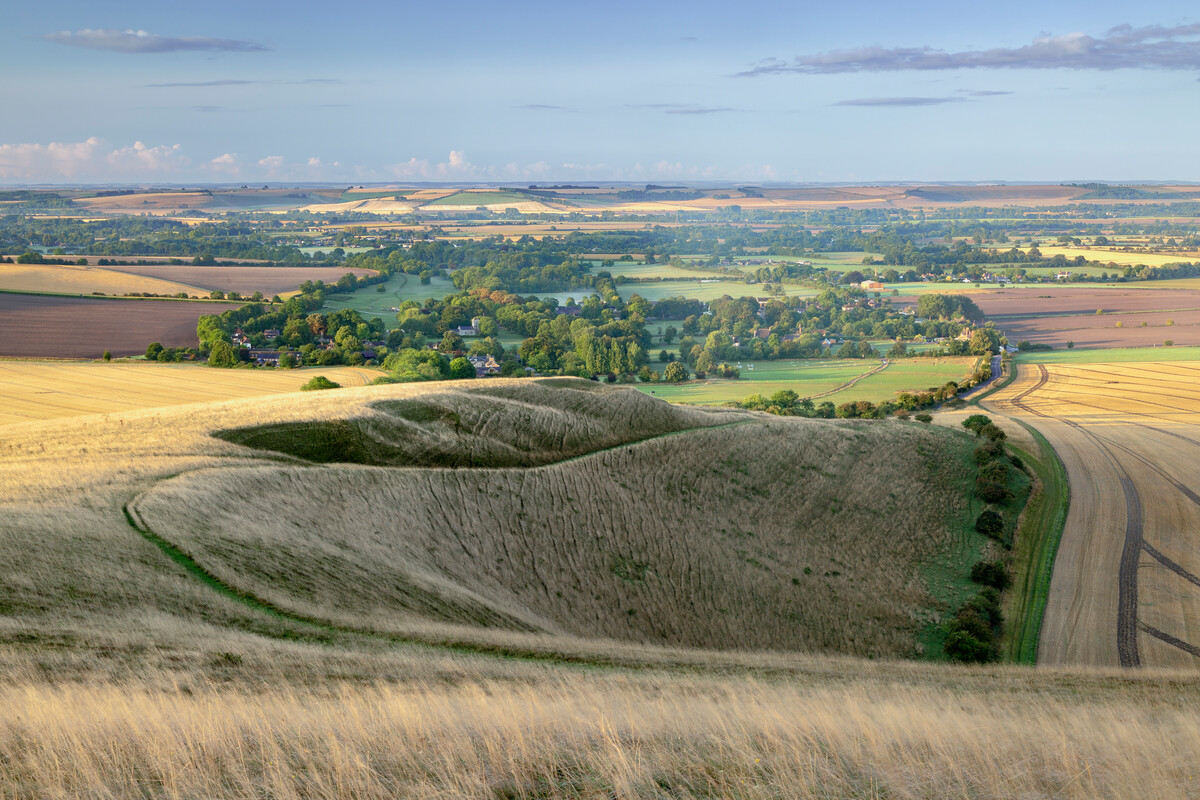
From rolling chalk downland to ancient waterways, Wiltshire is full of local treasures.
What’s special about your countryside?
These are just some of the places, stories and details that give England’s countryside its extraordinary variety.
Perhaps you’ve discovered somewhere you’d never heard of. Or perhaps they’ve made you think about the things that make your countryside distinctive.
What’s the walk, view, landscape feature, local tradition or little-known place you think more people should know about?
Share it using #LoveYourCountryside and tag CPRE.