


How we shaped one of the country’s biggest planning ideas
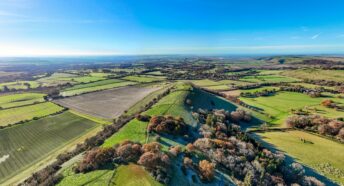
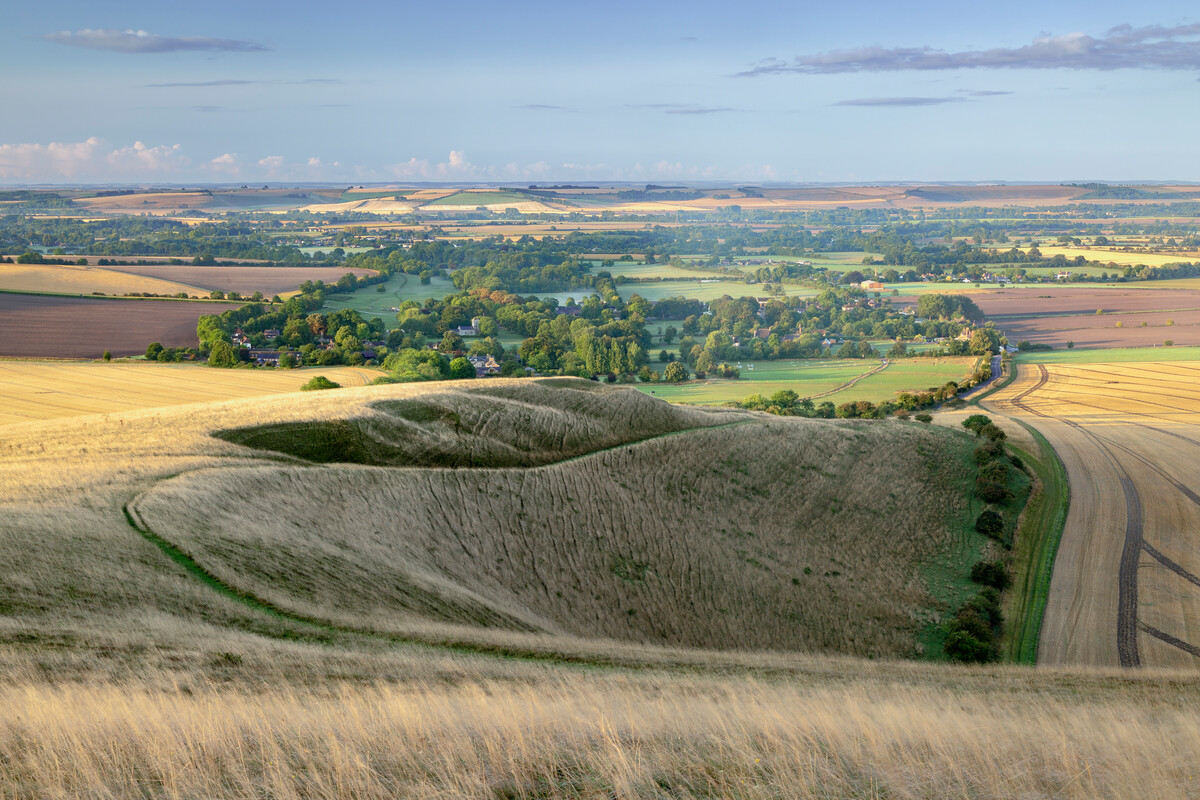
The Green Belt is the countryside next door benefitting 30 million people around England. It isn’t one single place, but a planning designation protecting areas of countryside around many of our towns and cities from inappropriate development. A place of varied landscapes from the very striking to the very ordinary, Green Belts provide numerous benefits for people and planet, such as supporting health and wellbeing; offering important habitats for wildlife; giving people access to nature; mitigating the worst climate effects like flooding and drought; and growing the food on our tables.
While this land use tool has been around for over 80 years, Green Belts are evolving to meet new demands in the context of the climate crisis and ever greater pressures on land. During our centenary year, we’re celebrating our history in helping to shape one of the country’s biggest planning ideas – and asking what Green Belts need to become over the next 100 years.
The birth of the Green Belt
Green Belts really are the bread and butter of CPRE. In 1938, following a decade of warnings about the increasing loss of the countryside from key CPRE figures, activists and policymakers, the Green Belt (London and Home Counties) Act was passed. This gave local authorities the power to acquire and protect land around London from development.
Then in 1944, Sir Patrick Abercrombie, an architect and planner, as well as one of the founding members of CPRE, published his ‘Greater London Plan’, known as the ‘Abercrombie Plan’, which proposed a Green Belt around London. This sustained pressure to prevent urban sprawl and protect nature eventually led to the Town and Country Planning Act in 1947, which gave Local Planning Authorities across the country the power to safeguard land as Green Belt. In 1955, the Housing Minister Duncan Sandys made Green Belt national policy, asking councils across England to consider designating them around their towns and cities.
CPRE’s legacy in the creation of Green Belts up and down the country is exemplified in Sheffield. Ethel Haythornthwaite, one of CPRE’s earliest campaigners, saw the value in keeping land free from development outside of the city.
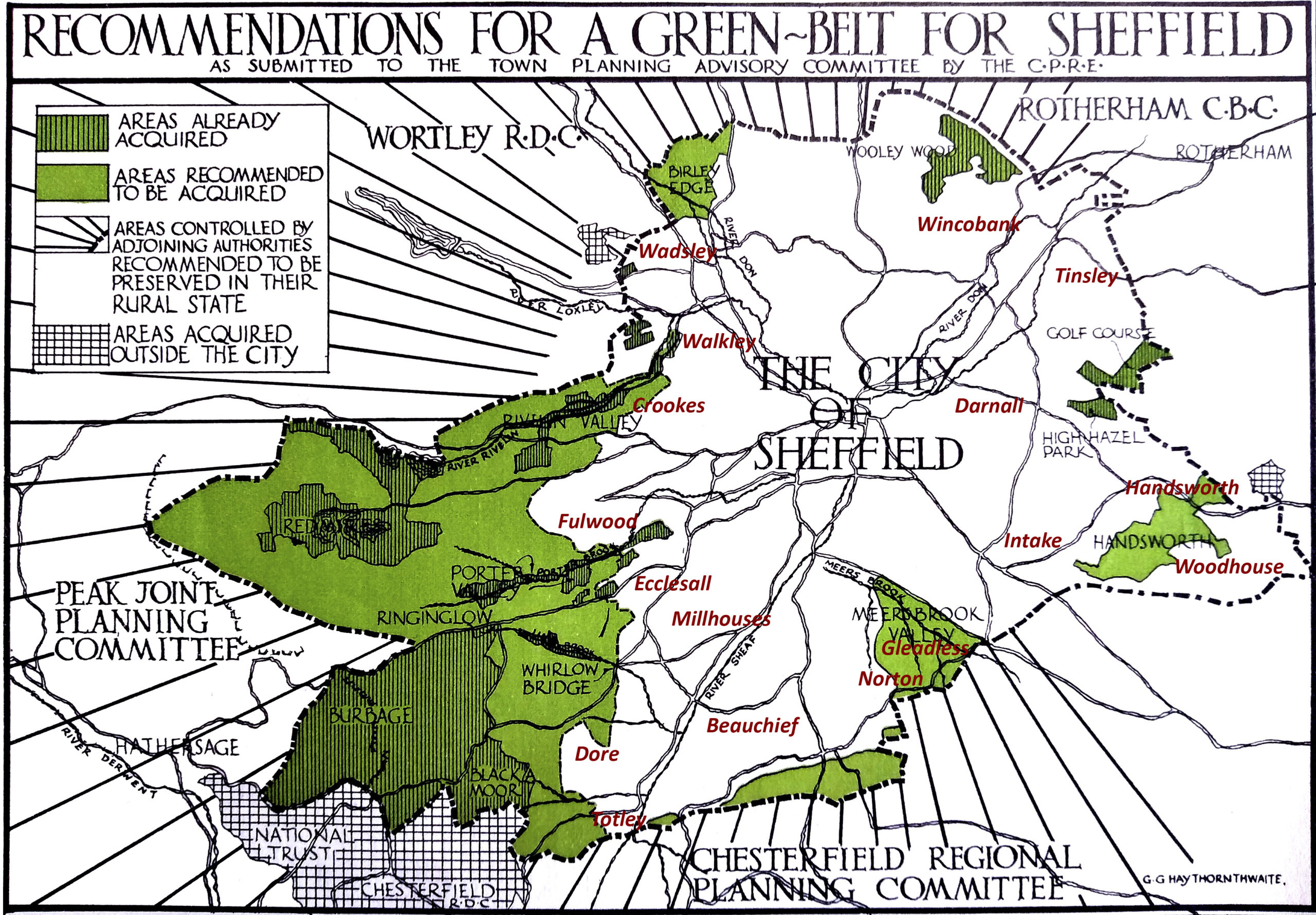
Ethel presented the findings of the CPRE survey, together with this map, to the Town Planning Advisory Committee in 1937. The CPRE recommendations were approved in 1938.
In 1935, she told the Sheffield City Planning Committee that this area could be a green ‘Gateway to Derbyshire’. CPRE surveyed the land around Sheffield – farms, woods, moorland – and submitted a plan for the Green Belt, which was accepted a year later. Ethel lobbied tirelessly for the Council to buy up this land and by the end of the Second World War, nearly all the land in the original proposal had been secured. She continued to protect Sheffield’s Green Belt from threats of development in the years to come.
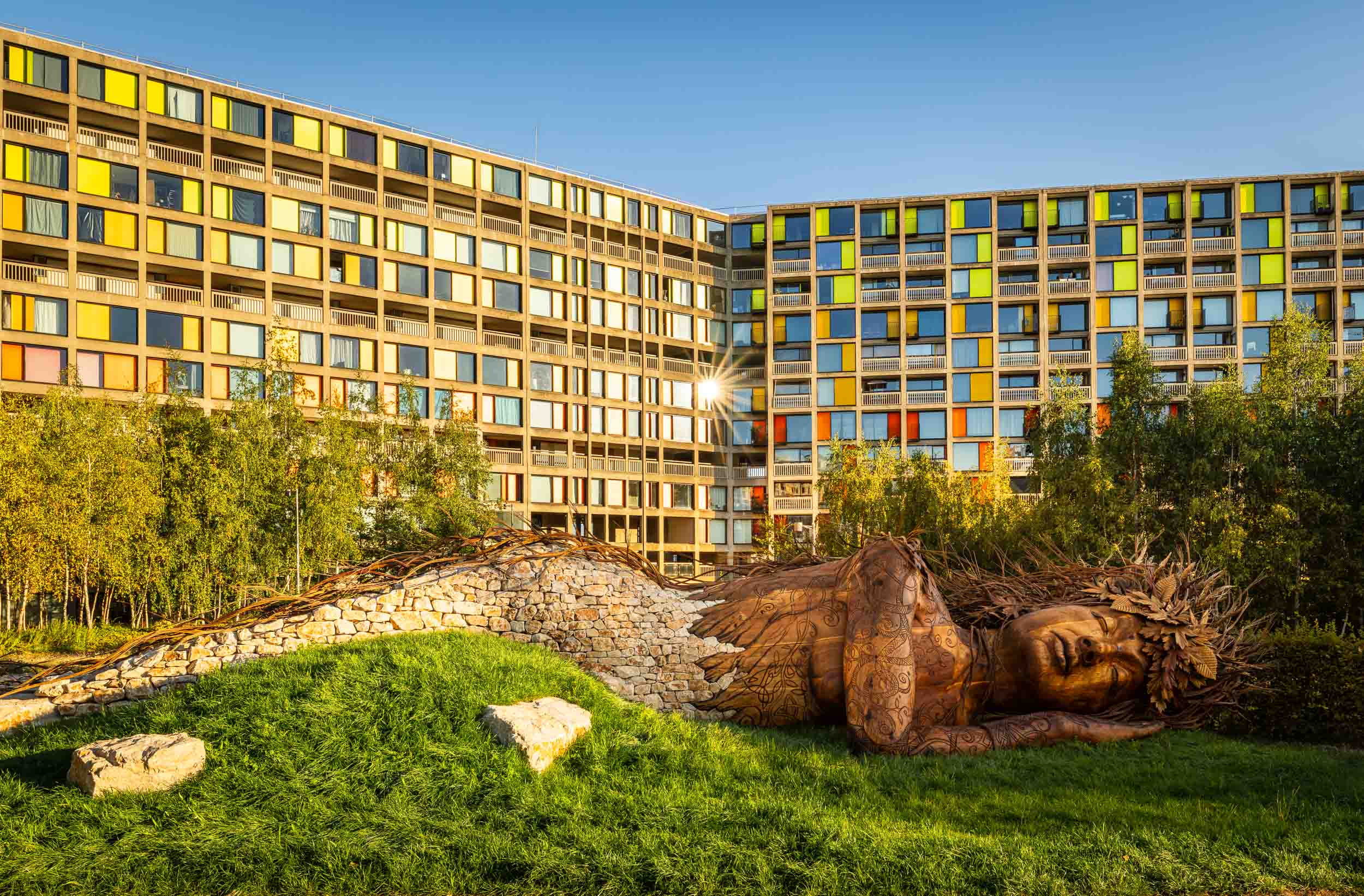
Fittingly, CPRE’s ‘On the Edge’ garden, which won a Gold Medal and Garden of the Year at the RHS Chelsea Flower Show this year, has been relocated to the Park Hill housing development in Sheffield. Designed by multi-award-winning designer Sarah Eberle, the garden shines a light on the fragile but vital countryside found on the fringes of towns and cities – places that connect people to nature in everyday life, yet are often undervalued or under threat.
Why the Green Belt still matters today
Protecting the countryside on the edges of towns and cities matters more now than ever. Originally designed to prevent urban sprawl, Green Belts now have a much bigger role to play.
Sadly, England is now one of the most nature-depleted countries in the world and combined with the increasing effects of climate change – such as extreme heat, drought and flooding – it is vital that we create carbon sinks and provide connected habitats for wildlife, free from development. Farmland on the urban fringe also makes a significant contribution to UK food supply, providing 20% of all cereals and around 10% or more of many staple foods.
But Green Belts matter because of what they offer people, too. The Covid-19 pandemic highlighted just how important access to nearby nature is for our physical and mental wellbeing – and how unequally that access is shared.
That connection comes through strongly in the stories people have shared through our On the Edge campaign. Scores of supporters across the country have been adding their special places to our interactive map. Many have highlighted the incredible effect that nature has on them. You can read more here.
We’re lucky to also have plenty of great examples of recent and new Green Belts being created by our local groups across England. The Oxford Green Belt Way (OGBW) is a 50-mile circular walk exploring the countryside around Oxford, passing through historic villages, stretches of river and breathtaking landscapes. Created by members of CPRE Oxfordshire in 2007 – alongside those from Oxfordshire Field Paths Society and Oxfordshire County Council – the whole route is marked and is accessible by regular bus services from Oxford.
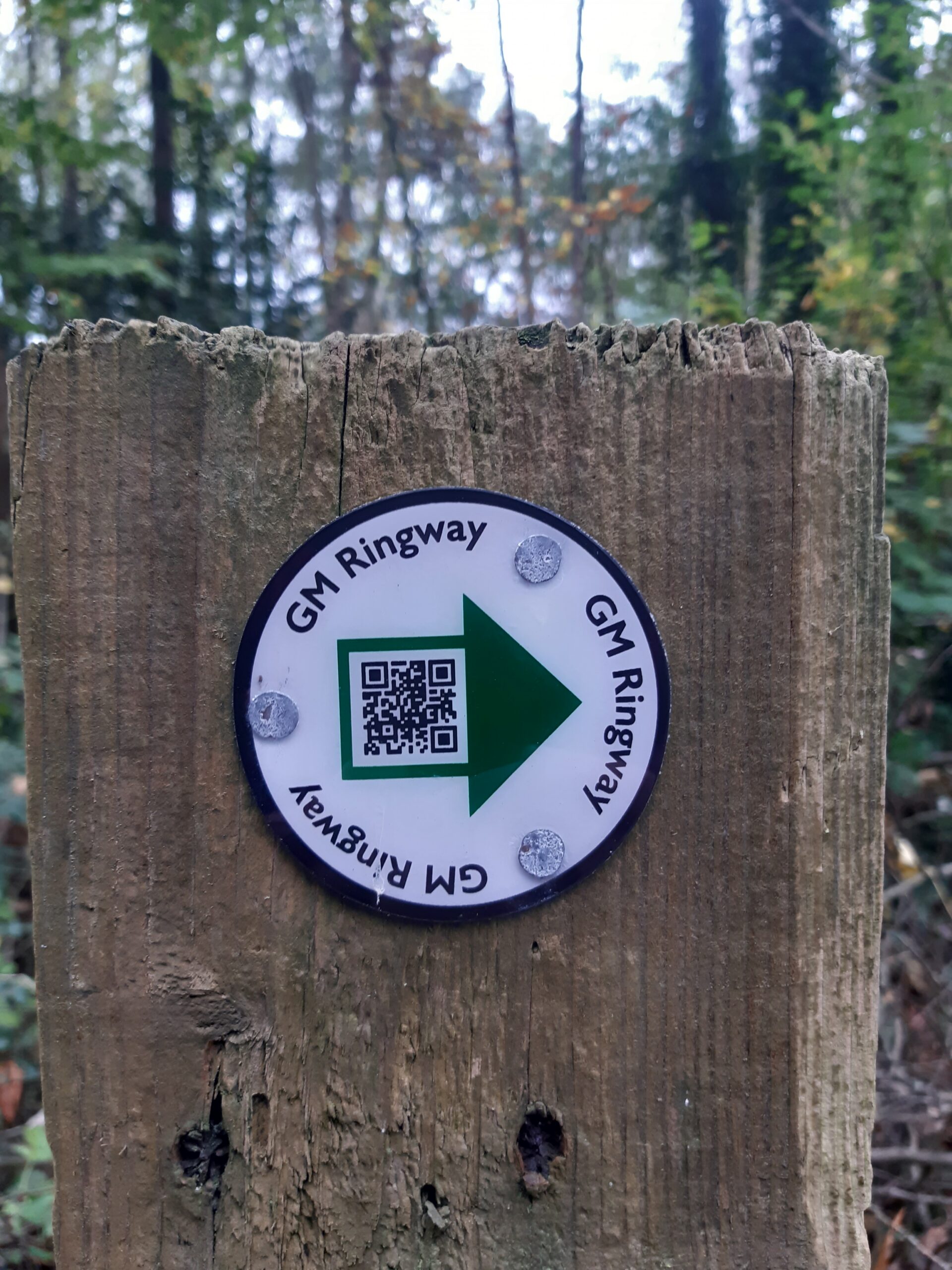
Further north, the Greater Manchester Ringway is a 200-mile circular trail around the whole of the city-region, also accessible by public transport. Working with The Ramblers, CPRE Lancashire, Liverpool City Region and Greater Manchester installed 1,500 waymarking roundels along existing public rights of way, weaving together heritage and nature that already existed close to people’s homes.
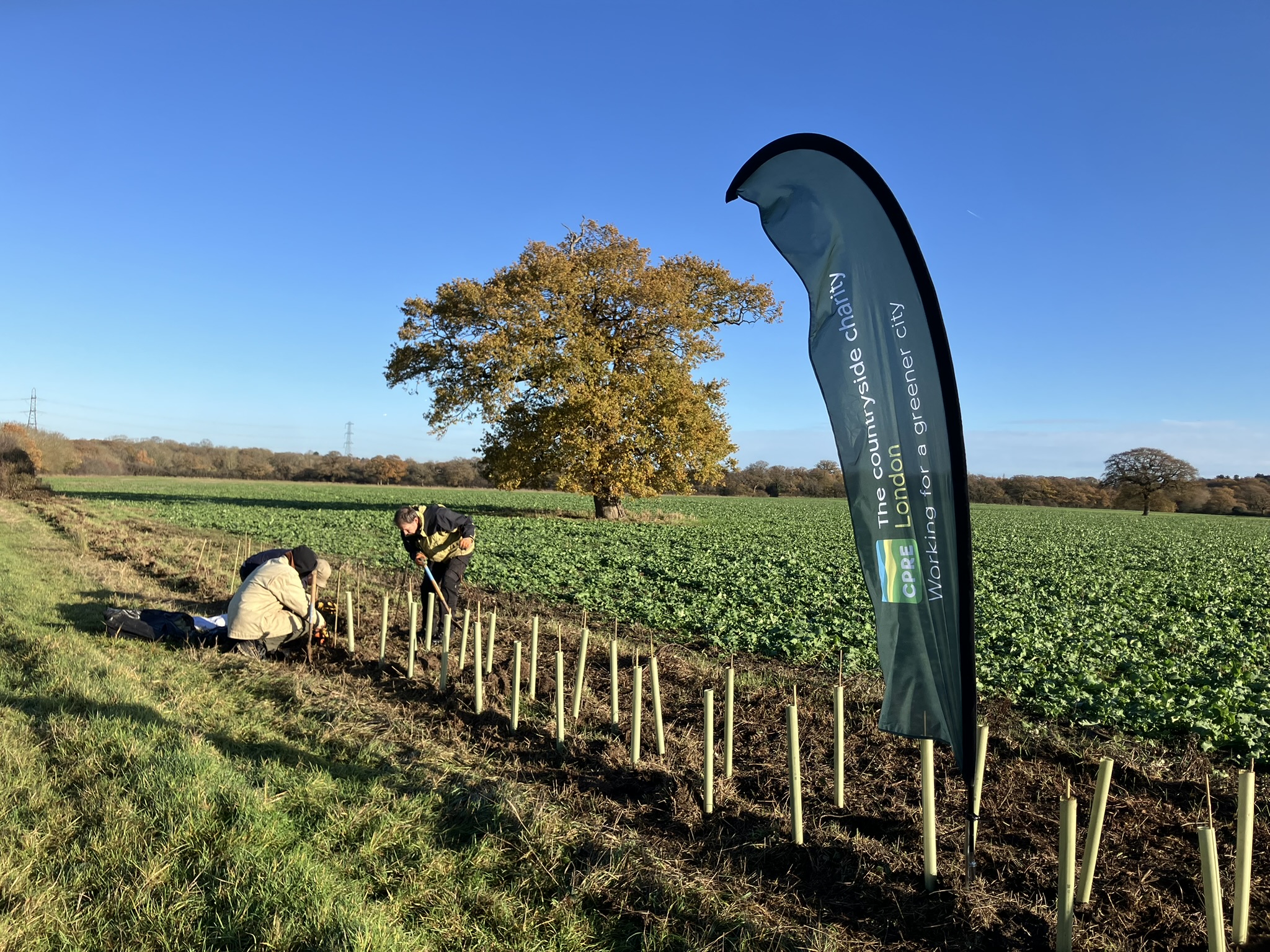
Over in London, Phil Paulo is busy with other partners building a green corridor to encircle the capital, the London Tree Ring. This ambitious 25-year project by CPRE London aims to create 200km of trees and connected habitat, including woodlands, orchards and hedgerows to bolster the already existing Green Belt, reach into nature-deprived communities, increase public access – including key walking and cycling routes – and help counter the effects of the climate emergency.
From the Green Belt Way, to the Ringway and through to the Tree Ring, these examples from our local groups demonstrate how the Green Belt concept is evolving to deliver more for nature, climate and access.
Outside the box: what the Green Belt could become
But are there ways that edgeland protection can go even further? With ‘mounting pressures on Green Belt land, including housing demand, weakened planning controls, losses in farming capacity, and recently introduced ‘grey belt’ policy reforms’, we can and should push ourselves to reimagine what these spaces could do for people and nature in the next 100 years.
Indeed, Paul Miner, former Head of Policy at CPRE, suggests extending or creating new National Landscape designations to cover areas of countryside around large towns. Even New Towns could benefit from the introduction of Green Belts around them. New conceptions of the Green Belt are emerging around the world, working within and around legal designations and government authorities. In Canada, Ottawa’s Greenbelt is entirely owned by the federal government, while the Ontario Greenbelt is conceived of as an ‘interconnected natural, agricultural, economic, and cultural system’ by the charitable Foundation that runs it. What would happen if England’s Green Belts were viewed in this way by the government, as a key asset, rather than an obstacle to overcome?
Back home, our local groups are broadening the scope of the Green Belt and creating new ones bit by bit. This year, CPRE Lancashire was awarded £245,000 by the National Lottery Heritage Fund to develop the Liverpool City Region (LCR) Circular Walking and Cycling Trail. This 200-mile trail will connect all six LCR local authorities (Halton, Knowsley, Liverpool, Sefton, St Helens, Wirral). The route may even be open in time for the Tour de France 2027, which is due to go via Liverpool.
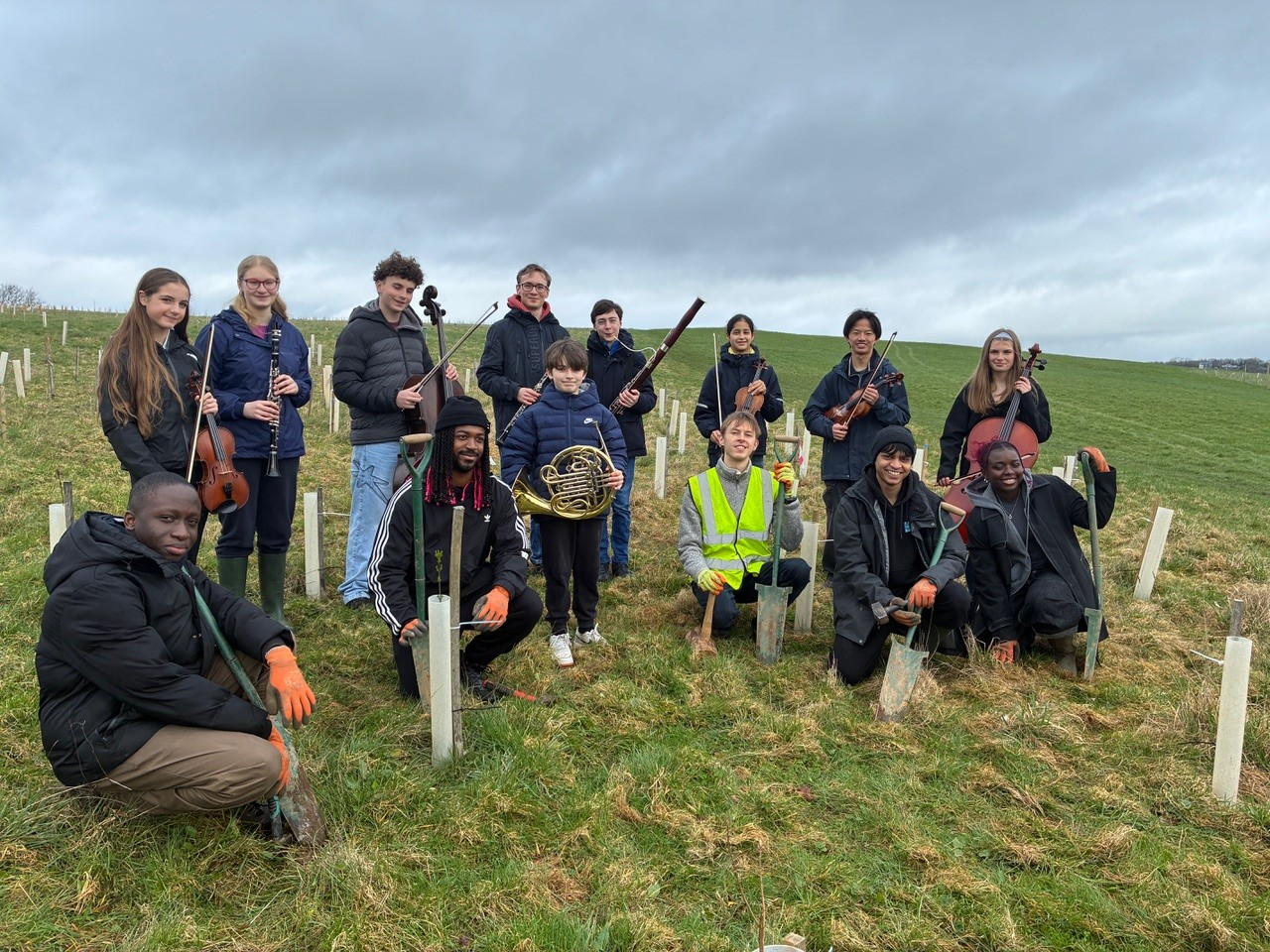
To mark our 100th birthday, CPRE Avon & Bristol is developing a new Centenary Woodland Grove between Bristol and Bath, they themselves are already surrounded by Green Belts. On a blustery day, 100 trees were planted by members of the Bristol Youth Orchestra and Babbasa, a social enterprise in Bristol that supports young people from low-income and ethnically diverse communities to progress into employment and education.
Created by a new generation of countryside stewards, the Great Avon Wood, as it will be named, will host a variety of native trees like oak, hazel, hawthorn, bird cherry, rowan and wild pear, providing a joined-up habitat for wildlife and insects.
In this way, our local groups are protecting the countryside on the edges of towns and cities, whilst integrating communities into these environments.
Green Belts are an example of something that people fought for almost a century ago, which has become hugely important to millions of people. But sadly, the threats to the Green Belt have not disappeared. In fact, in some cases, they have intensified. The government’s top-down housing targets were shaped by developers seeking excess profits and not based on local need. The so-called ‘grey belt’ policy also risks the loss of countryside in the Green Belt.
And there’s so much more to do amidst the worsening climate and nature crisis, and the increasing social isolation that comes with this.
So the challenge, then, is to protect the Green Belt, regenerate what’s been lost and reimagine these places to support a sustainable future, healthier communities and a resilient, beautiful countryside.